A California tech CEO is facing up to 20 years in prison after federal authorities arrested him for allegedly smuggling more than $300 million worth of Nvidia AI chips into China over nearly three years — the largest such case brought under U.S. export controls on advanced semiconductors.
What happened
Greg Lui, 38, the owner and CEO of City of Industry-based Earthmade Computer Inc., was arrested on October 1, 2026 (UTC-7) and arraigned in federal court in downtown Los Angeles on October 2, 2026 (UTC-7). The indictment, unsealed by the U.S. Department of Justice, alleges that Lui and unidentified co-conspirators ran a sustained smuggling operation from October 2023 through August 2026.
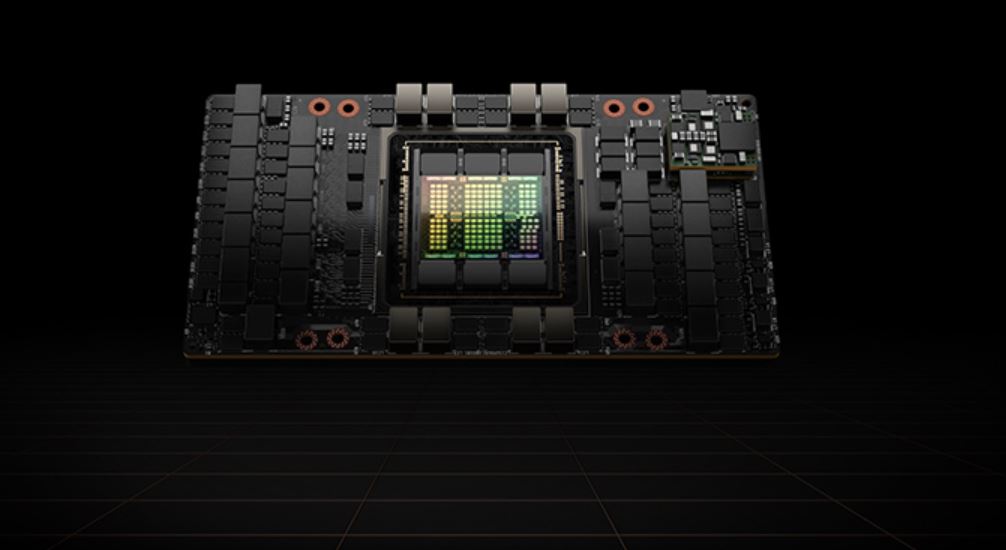
The scheme targeted some of the most coveted hardware in AI: servers containing Nvidia A100 and H100 GPUs, as well as consumer-grade RTX 4090 and RTX 5090 graphics cards. All of these products require a Commerce Department license for export to China due to their potential use in training large AI models and military applications.
To evade detection, the group allegedly routed shipments through third countries — primarily Malaysia and Singapore — where the servers were repackaged and relabeled before being forwarded to Chinese buyers. The indictment charges Lui with three counts: violating the Export Administration Regulations, outbound smuggling, and conspiracy to commit money laundering. Each count carries a maximum sentence of 20 years.
Why $300 million matters
The scale of this case is what sets it apart. To put $300 million in context: at typical 2024–2026 pricing, an H100 SXM module retails for roughly $25,000–$40,000, while an A100 runs $10,000–$15,000. A $300 million haul could represent anywhere from 8,000 to 30,000 GPUs — enough compute to train a frontier-class model or equip a substantial portion of a Chinese AI lab's infrastructure.
U.S. First Assistant Attorney Bill Essa Yli was blunt about the stakes, stating that the chips "could be weaponized by the Chinese military against the United States." That framing reflects the core logic behind the export control regime: advanced GPUs are dual-use technology, capable of both civilian AI development and military applications ranging from autonomous weapons to cryptanalysis.
This isn't an isolated bust. U.S. authorities have brought a growing number of chip-smuggling cases since the October 2022 export controls were first announced, but most have involved smaller shipments or individual brokers. Lui's alleged operation — nearly three years of continuous trafficking through established third-country transit hubs — suggests a sophisticated, well-funded network rather than an opportunistic reseller.
The bigger picture
The arrest lands at a moment when the entire AI supply chain is under unprecedented geopolitical pressure. Nvidia's H100 and its successor, the H200, remain the gold standard for training large language models, and Chinese AI labs from DeepSeek to Alibaba have been scrambling for alternatives since direct sales were cut off. The result has been a thriving gray market: chips routed through Hong Kong, Singapore, Malaysia, and the United Arab Emirates, often with prices inflated 50–100% above list.
What makes this case significant is not just the volume but the business model. Earthmade Computer was, on paper, a legitimate systems integrator — the kind of company that buys servers in bulk and resells them. That cover allowed Lui to place large orders without raising immediate red flags, while the actual end users were thousands of miles away. It's a playbook that export-control enforcers will likely see repeated: legitimate-looking front companies purchasing controlled hardware, then laundering it through friendly jurisdictions.
The money-laundering charge is also telling. It suggests the government believes the profits from the smuggling were cycled back through the financial system to fund further purchases — turning what might look like a simple export violation into an ongoing criminal enterprise.
What to watch
Three things will determine whether this arrest is a one-off or the opening move in a broader crackdown.
First, whether co-conspirators are named and arrested. The indictment references "unidentified co-conspirators," and a network this size almost certainly involves logistics providers, payment processors, and Chinese end buyers. If the Justice Department works its way up the chain, this could become a multi-defendant case that disrupts a major smuggling pipeline.
Second, whether Nvidia and other chipmakers face pressure to tighten their own distribution controls. The export-control regime relies heavily on manufacturers knowing their customers. If a single systems integrator can quietly move $300 million in chips, it raises questions about due diligence throughout the supply chain — and whether regulators will demand more aggressive end-user verification.
Third, how China responds. Previous high-profile chip-smuggling arrests have prompted Chinese state media to decry "tech hegemony" while simultaneously accelerating domestic chip development. The larger the case, the more political oxygen it gives to hardliners in Beijing pushing for full semiconductor independence. That, in turn, could accelerate the very capability the export controls were designed to slow.
The underlying tension won't resolve anytime soon. As long as a single H100 can command a 100% premium on the Chinese gray market, the financial incentive to smuggle will outweigh the risk for well-funded operators. Arrests like Lui's raise the cost of doing business — but $300 million in alleged revenue suggests the cost wasn't high enough.
No comments yet