A drone strike on a data center broke Russia's internet
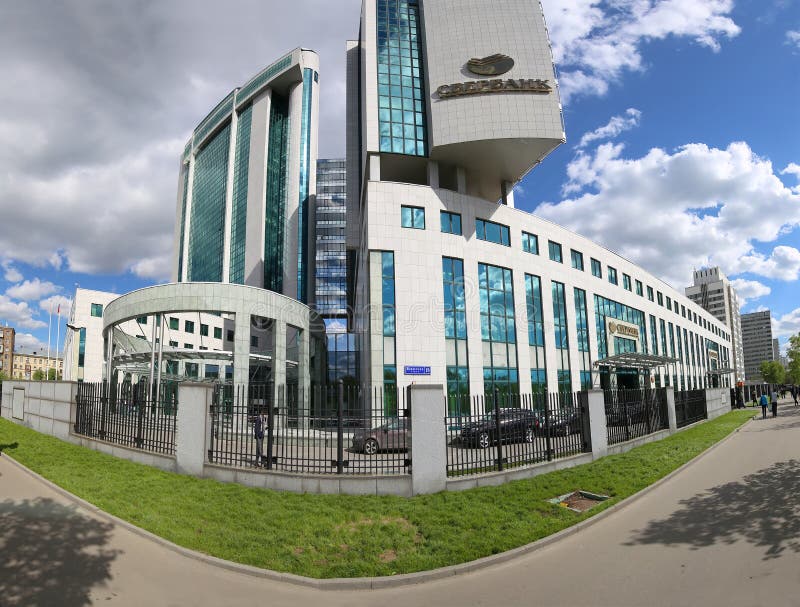
On the morning of October 14 (UTC+4, Saratov local time), Ukrainian drones swept through unprotected airspace and slammed into a squat data center in Balakovo, Russia. The facility, owned by Sberbank — Russia's largest financial institution, serving 100 million customers — housed what was meant to be the country's biggest supercomputer. Fire engulfed the building. Servers across Russia went dark.
By the time Russians woke up, their online banking apps were dead. Emails wouldn't load. Ride-hailing stopped working. Grocery delivery orders vanished. Even dating apps went offline. This wasn't a hypothetical cyberattack — it was a physical strike on the backbone of Russia's digital economy, and it exposed how fragile a centralized tech infrastructure can be when it becomes a military target.
What happened
The Balakovo data center was still under construction but already partially operational. Announced in 2020, it spans roughly 60,000 square meters and was valued at 122.2 billion rubles (about $1.3 billion). Vedomosti, a Russian business daily, reported it was designed to house a new supercomputer worth 500 billion rubles. The site sits near the Balakovo nuclear power plant, roughly 100 miles from the Saratov oil refinery that was also bracing for drone attacks that night.
Sberbank's first deputy chairman, Alexander Vedyakhin, confirmed the strike to Russian state news agency TASS later that day. He insisted that "all systems and services of the bank continued operating" and that no employees were injured. Saratov governor Roman Busargin echoed the claim that "all infrastructure facilities operated normally."
The data told a different story. DownDetector and Sboy.rf, services that track outages, showed cascading failures across dozens of platforms.
The damage, platform by platform
| Service | Category | Impact |
|---|---|---|
| Sberbank online banking | Banking | App and web services disrupted |
| Sberbank GigaChat | AI assistant | Neural network service down |
| Samokat | Grocery delivery | Users unable to place orders |
| Yandex (84+ platforms) | Tech conglomerate | Search, cloud, pay, taxi, food delivery all affected |
| Yandex Pay | Digital payments | User balances reportedly disappeared |
| Yandex Go | Ride-hailing | Cannot order or pay for taxis; drivers received "phantom orders" |
| Yandex Cloud | Cloud storage | Photos and videos vanished for some users |
| Alice (Yandex) | Smart assistant | Voice assistant broke down |
| Rostelecom, MTS, MegaFon, T2 | Telecom | Major carriers experienced disruptions |
| Mail.ru | Email / cloud | Services including cloud storage affected |
| VK | Social media | Platform services disrupted |
| Alfa-Bank, VTB, Rosselkhozbank | Banking | Online banking unavailable |
| Tochka Bank | Banking | Business Online services down |
| Ozon | E-commerce | Marketplace affected |
| Avito | Classifieds | Platform disrupted |
| Gosuslugi | Government services | State portal affected |
| Reg.ru | Web hosting | Hosting provider disrupted |
| Kontur | Business software | Digital services platform down |
| Twinby | Dating app | Shut down entirely |
| Channel One | State television | Broadcaster's digital services affected |
Sources: Ukrinform, The Moscow Times, The Telegraph, DownDetector data.
Sberbank's stock fell nearly 0.7% on the news.
A week of data center warfare
The Sberbank strike was the fourth Russian data center hit in a single week — and the first targeting Sberbank. The previous three belonged to Yandex, Russia's largest tech company, which combines the functions of Google, Amazon, Uber, and Deliveroo in one platform.
- October 8 (UTC+3): Drone strike on Yandex data center in Ryazan Oblast
- October 9 (UTC+3): Strike on Yandex data center in Kaluga Oblast
- October 11 (UTC+3): Strike on Yandex data center in Vladimir Oblast — facility completely shut down, power disruption in an availability zone
- October 14 (UTC+4): Strike on Sberbank data center in Balakovo, Saratov Oblast
Ukrainian defense company Fire Point taunted Russia in a social media post after the Sberbank attack: "You didn't think it would stop with just Yandex, did you?"
Ukraine has framed the strikes as retaliation for Russian attacks on its own data centers in September. Ukrainian authorities have not officially claimed responsibility for any individual strike.
The AI angle: supercomputers at risk
Neither Yandex nor Sberbank has confirmed whether the strikes damaged the supercomputers used to train their flagship AI models. But T-Invariant, an independent Russian science outlet designated as a "foreign agent" by the authorities, reported that three Yandex supercomputers had been disabled. Expert analysis cited by the outlet described the damage to Russian IT infrastructure as "colossal."
Some specialist Russian outlets have reported that the damaged data centers may not resume full operations until 2028, citing global chip shortages and difficulties evading Western sanctions. Kommersant offered a more conservative estimate of six months for repairs.
On October 15 (UTC+3), Vladimir Putin and senior officials held a meeting on "information security," attended by Sberbank CEO German Gref. The Kremlin claimed the meeting was unrelated to the data center attacks. Valery Ermakov, deputy chairman of Rostelecom, floated the idea of establishing a "doomsday" backup center to store copies of critical data.
Why it matters
This is a watershed moment for how the world thinks about data center security — and it has direct implications for the AI industry.
First, it proves that physical attacks on computing infrastructure can be as disruptive as the most sophisticated cyberattacks. A handful of cheap drones did more damage to Russia's digital economy than years of sanctions and cyber operations combined. For AI companies that rely on massive, centralized data centers to train and serve models, this is a wake-up call. The physical security of GPU clusters is no longer a back-burner concern.
Second, it exposes the vulnerability of centralized tech ecosystems. Yandex and Sberbank together underpin an enormous share of Russia's digital life. When their data centers go down, the entire country feels it. Compare that with Ukraine, which early in the war migrated critical data and services outside its borders — a decision that RUSI senior research fellow Joseph Jarnecki says may make Ukraine more resilient to this kind of attack than Russia.
Third, it raises uncomfortable legal and ethical questions. Jarnecki told The Telegraph that targeting civilian data centers is "in all likelihood" a breach of international human rights law. The normalization of data center strikes in this conflict could set a precedent that other conflicts — and other actors — follow. Given how dependent Western economies and AI companies are on centralized cloud infrastructure, that normalization carries real risk.
Fourth, the AI-specific dimension matters. Russia has been racing to catch up with the U.S. and China in AI, with Yandex and Sberbank as its flagship players. If three supercomputers are indeed disabled and data centers face years of repair, Russia's domestic AI ambitions could be set back significantly. That changes the global AI competitive landscape — not because Russia was leading, but because it removes a potential pole in a field that is already consolidating around a handful of players.
The critical view
It's important not to overstate what we know. Sberbank and Yandex have both minimized the damage, and independent verification of supercomputer status is impossible from outside Russia. The "2028" recovery timeline comes from Russian specialist outlets with unclear sourcing; Kommersant's six-month estimate is more credible. The outages were real and widespread, but how much of that was due to the Balakovo strike specifically versus the cumulative effect of a week of attacks on Yandex is hard to disentangle.
There's also a propaganda dimension on both sides. Ukrainian sources have every incentive to amplify the damage; Russian officials have every incentive to downplay it. The truth likely sits somewhere between "all systems normal" and "Russia's internet is destroyed."
And while the strike is dramatic, it's part of a broader pattern — data centers have been targeted since the early days of the full-scale invasion, and Iranian forces have targeted similar facilities in the Gulf. What's new is the scale and the explicit focus on AI-capable supercomputing infrastructure.
What to watch next
Three things will tell us how significant this really is:
- Whether Yandex or Sberbank discloses supercomputer damage — if either confirms that AI training clusters were destroyed, the strategic impact rises substantially. Watch for earnings calls, investor disclosures, or government statements in the next two weeks.
- Whether Russia retaliates against Ukrainian or Western data centers — the escalation ladder here is dangerous. If Russia strikes data centers in NATO territory, the conflict enters a new phase.
- Whether major AI/cloud providers announce physical hardening measures — the first hyperscaler (AWS, Google Cloud, Azure, or a Chinese provider) to publicly announce anti-drone defenses or geographic dispersion of GPU clusters will signal that the industry has absorbed the lesson.
The war in Ukraine has already reshaped energy markets, food supplies, and global security. Now it's rewriting the playbook for how the world protects — and targets — the physical infrastructure of the digital age.
No comments yet