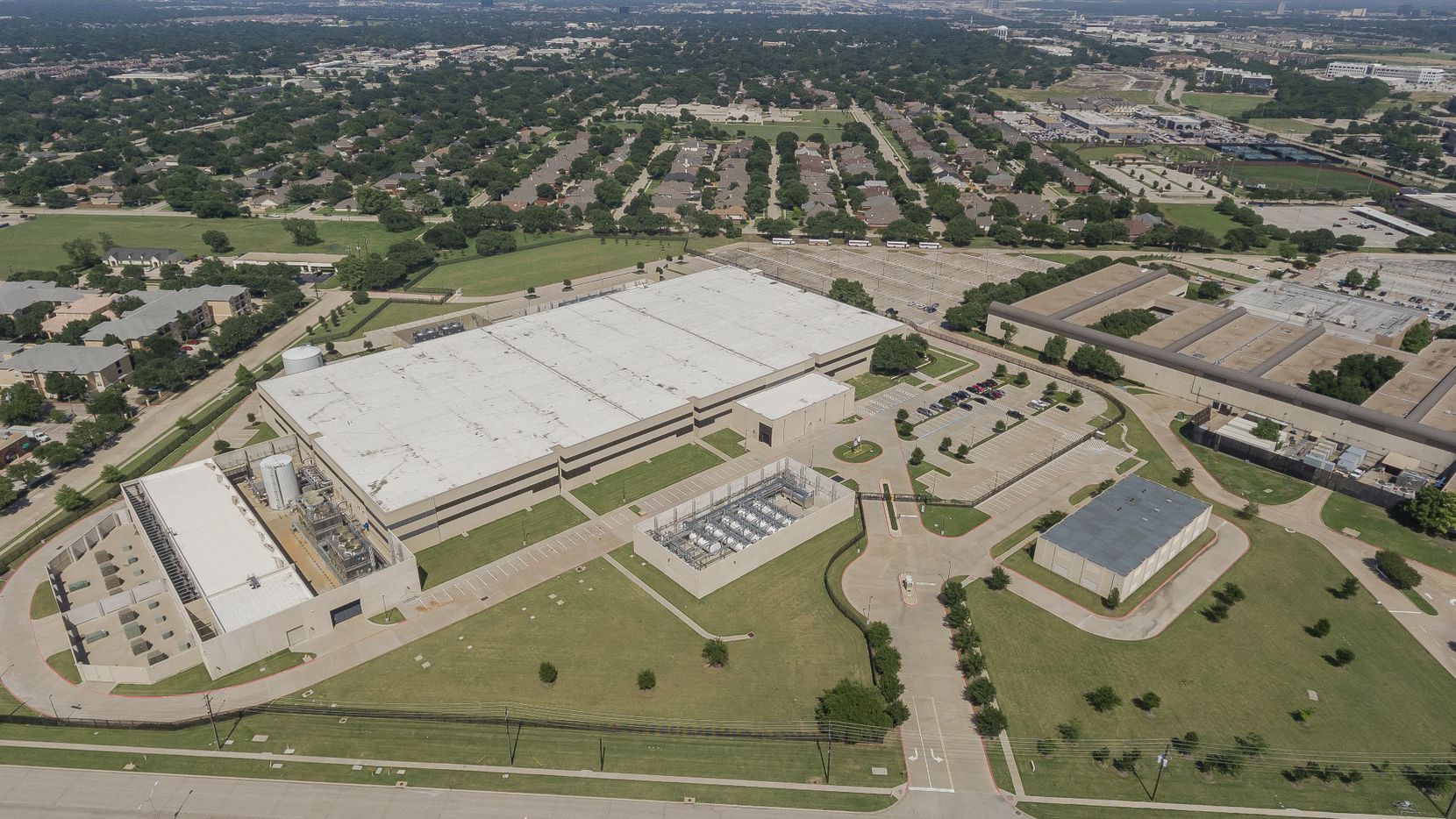
The AI infrastructure boom just hit its first real debt wall. CoreWeave, the Nvidia-backed "neocloud" that rents GPU compute to OpenAI, Microsoft, and Meta, saw its five-year credit default swaps blow past 1,194 basis points in intraday trading this week — a record high that implies a better-than-60% chance of default within five years. Its 2031 bonds now yield over 16%. The stock crashed more than 15% on Wednesday, October 14, 2026 (UTC-4, US Eastern), before clawing back 5.9% on Thursday, October 15, 2026 (UTC-4) after Jensen Huang personally stepped in to calm markets. This isn't one company's balance sheet problem. It's the first stress test of an entire industry built on borrowed money.
What broke
The numbers are stark. CoreWeave carries roughly $50 billion in total debt — about $22 billion in bonds and $26 billion in loans, according to LSEG data cited by Chinese financial outlet Yicai. As of mid-2026, debt principal stood at $35.6 billion, with $4.4 billion coming due by year-end and another $6.2 billion in 2027. Ratings agencies S&P and Fitch already grade the company junk (B and B+ respectively).
The bond market is now pricing in distress normally seen in companies heading toward restructuring. Its April-issued 9.75% notes due 2031 yield above 16%. Its June-issued 9.625% notes due 2032 trade below 80 cents on the dollar. Even Elon Musk, no stranger to leveraged bets, replied with a simple "yikes" when shown the yield numbers.
| Metric | Value | Source |
|---|---|---|
| Total debt | ~$50B | Reuters / LSEG |
| 5-year CDS spread | 1,194.5 bps (record) | ICE Data Services |
| Implied 5-year default probability | >60% (~63%) | Bloomberg / BNN |
| 2031 bond yield | >16% | Trace / BondCliQ |
| 2032 bond price | <80 cents on dollar | MarketWatch |
| Q2 2026 net loss | $626M | CoreWeave earnings |
| Q2 2026 interest expense | $640M (doubled YoY) | CoreWeave earnings |
| Q2 2026 operating cash flow | $679M | CoreWeave earnings |
| Q2 2026 capex | $6.42B | CoreWeave earnings |
| Annual capex plan (2026) | $35B–$39B | CoreWeave guidance |
| Revenue backlog | $104.2B | CoreWeave Q2 |
| Expected 2026 revenue | ~$13B | Analyst estimates |
| Expected 2026 net loss | ~$2.13B | Analyst estimates |
The mismatch is the whole story. CoreWeave generated $679 million in operating cash flow last quarter while spending $6.42 billion on equipment and property. It plans to spend $35–39 billion on infrastructure this year alone. The backlog is real — $104 billion and growing — but backlog converts to cash over multi-year contracts, while debt maturities arrive on a much shorter clock.
Huang's reassurance, and the catch
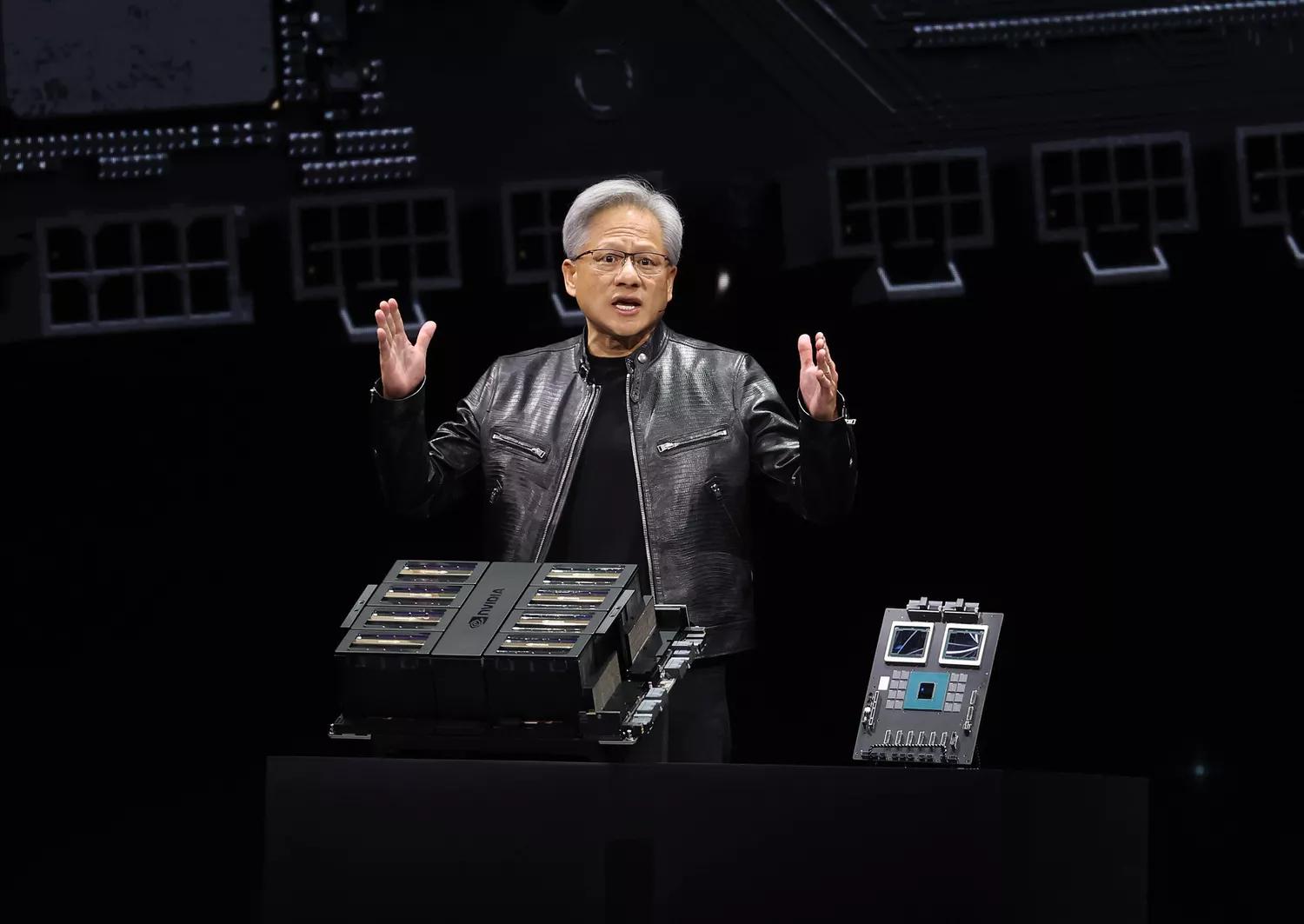
On Thursday, October 15, 2026 (UTC+2, Central European Summer Time), Jensen Huang told Bloomberg at an event in Stockholm that CoreWeave's "strength is improving every day" and that its "cost of capital [is] actually decreasing." He said Nvidia does not need to backstop the company.
The bond market disagrees with the cost-of-capital claim. And there's a structural reason Huang's reassurance carries less weight than it might: Nvidia is not a neutral observer. It owns roughly 10% of CoreWeave, is its largest supplier, and has already agreed to buy $6.3 billion of unsold CoreWeave capacity through April 2032. A backstop already exists — it's just structured as a capacity purchase rather than a loan guarantee. Huang also noted Nvidia is exploring a role in a roughly $500 billion third-party AI infrastructure financing fund, which CoreWeave is monitoring as a potential funding avenue. If the company truly needed no support, it wouldn't be circling a half-trillion-dollar industry fund.
CoreWeave CEO Mike Intrator pushed back in an internal memo on Wednesday, October 14, 2026 (UTC-4, US Eastern), telling employees the deal backlog "more than covers" debt obligations and that markets can sometimes "misunderstand and act irrationally." Co-founder Brannin McBee separately told the Financial Times the company is seeking an investment-grade credit rating that would open the door to "unlimited" capital. That ambition now looks distant with CDS at record levels.
Why this matters beyond one stock
CoreWeave is the poster child for the "neocloud" model — newer cloud providers that borrow heavily to buy Nvidia GPUs, pack them into data centers, and rent compute to AI companies. The entire AI buildout depends on this financing loop working. The fear is that it's circular: Nvidia lends and guarantees capacity, the cloud company buys more Nvidia chips, and revenue chases itself.
The contagion is already visible. The Philadelphia Semiconductor Index has erased over $1.6 trillion in market value in an 11.6% slide over six sessions. The Nasdaq is down more than 3% in the same period. CoreWeave's neocloud rivals — Nebius, Applied Digital, Iren — fell 3.2% to 5% on Thursday, October 15, 2026 (UTC-4). AI infrastructure developer Firmus recently abandoned a planned $5.5 billion offering after investors balked. Data center operator AirTrunk postponed its IPO.
Gartner dropped a bombshell the same day, October 15, 2026 (UTC): it estimates 80% of neoclouds could shut down by 2030, and that more than $3.5 trillion of AI infrastructure spending could face impairment if providers keep their current pace. "In 2026, AI providers are expected to spend nearly $1 trillion on AI infrastructure, and are forecast to invest an additional $6 trillion between 2027 and 2030," said Gartner analyst Will Sommer. "However, our research indicates enterprise and consumer AI revenue will be insufficient to support profitable returns on all planned AI capital expenditures during this period."
D.A. Davidson analyst Gil Luria was blunter, calling CoreWeave an "AI subprime asset" and warning that if the company can't roll its debt, its equity value could go to zero.
The critical question
This is not a call that AI demand is fake. The backlog is real, revenue more than doubled to $2.58 billion in Q2, and customers like OpenAI and Microsoft are not going away. The question is whether the financing structure can survive the gap between when cash arrives and when bills come due. CoreWeave needs to refinance $10.6 billion of debt within 18 months in a market where new borrowing now costs 15%. At that rate, interest expense alone would consume more than the company's entire operating cash flow.
The bull case rests on three things holding: Nvidia's implicit support, the backlog converting to cash on schedule, and AI demand staying strong enough that utilization stays high. The bear case is that any one of these slips — a customer delays, a new GPU generation makes existing hardware obsolete faster than expected, or credit markets tighten further — and the refinancing window closes.
What to watch next
Three concrete indicators will tell us whether this is a contained panic or the start of something bigger:
- The $4.4B year-end maturity and $6.2B 2027 maturity. Watch whether CoreWeave can refinance these at yields below 12%. If it can't, equity dilution or restructuring becomes the base case.
- Nvidia's next move. If Nvidia converts its capacity guarantee into an actual equity injection or loan guarantee, that's a signal the backstop was insufficient. If it doesn't, and CoreWeave survives on its own, the panic was overdone.
- Other neoclouds' access to capital. Firmus already pulled its offering. If Nebius, Lambda, or Crusoe face similar bond market stress, this becomes a sector-wide credit event rather than a single-company problem.
The AI boom isn't over. But the era of unlimited cheap debt funding every data center buildout may be. CoreWeave's balance sheet is where that reality is being priced in first.
No comments yet