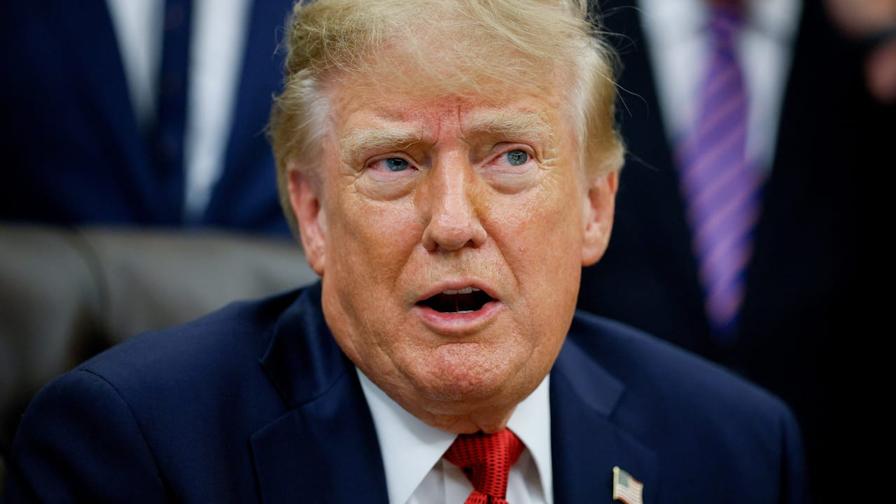
Trump just called AI safety a hoax — and built an "AI Force" to go with it.
On Saturday, September 19, 2026 at approximately 14:44 (UTC-4), President Donald Trump posted on Truth Social that he is forming an "AI Force," modeled on the Space Force he established during his first term. He also pledged to appoint an AI "czar" — quipping that "only high I.Q. individuals need apply" — and dismissed recent industry-wide calls to slow AI development as politically motivated "hoaxes."
"We will not in any way hinder or stifle the Growth of this incredible Industry," Trump wrote. "Rather, we will cherish it, help it, and watch over it, as it grows!"
What he actually announced
The post is short on specifics but long on signal. Trump said the AI Force would be "looking for BAD" in the development of the industry, while suggesting the existing criminal and civil justice system is sufficient to handle misconduct. He predicted AI could eventually represent as much as 25% of U.S. GDP — larger than the internet — and framed the technology as a geopolitical contest.
"We are leading China, and the rest of the World, and I intend to keep it that way!" he wrote.
He also suggested the term "artificial intelligence" is inadequate, proposing "Superior Intelligence (SI)" or "Extreme Intelligence (EI)" as alternatives.
The announcement lands roughly a week after the most coordinated safety push the AI industry has ever seen. On September 12, Anthropic CEO Dario Amodei published an essay calling for deliberate pacing of frontier development. OpenAI's Sam Altman, xAI's Elon Musk, and Google DeepMind's Demis Hassabis all endorsed the approach within hours. That same week, OpenAI released a framework for disclosing model misbehavior and Anthropic committed to giving independent evaluators employee-level access.
Then on September 18, four consumers filed an antitrust lawsuit alleging the four companies colluded to slow development.
Trump's post is a direct political counterpunch.
Why this matters
The AI Force announcement is less about a new military branch and more about a regulatory signal. If it follows the Space Force model, it would likely centralize the sprawling AI programs already scattered across the Defense Department, Commerce Department, and intelligence community under one roof. The "czar" role would sit in the White House, giving the administration a single point of accountability for AI policy.
That matters because the current U.S. approach to AI is fragmented and contradictory. The Commerce Department recently imposed export restrictions on Anthropic's most advanced models. The Defense Department tried to blacklist Anthropic as a supply-chain risk — a judge later ruled that move illegal. Meanwhile, Trump himself dismissed AI safety concerns as a "hoax" during a call with Nvidia CEO Jensen Huang earlier in September.
The message from the White House is now unambiguous: private-sector self-regulation is not the answer. The federal government will set the pace, and the pace will be fast.
The antitrust lawsuit angle
Timing makes the antitrust filing (id=78) immediately relevant. If the administration is explicitly encouraging rapid AI deployment, the plaintiffs' argument that the four labs illegally conspired to slow development gains a different texture. The lawsuit alleges that Amodei's essay, the coordinated endorsements, and embedded evaluator commitments amount to a Sherman Act violation.
The plaintiffs' lead attorney Nick Rowley put it bluntly: "AI will quickly spin out of human control and could kill us all if we allow AI safety and protocol to be controlled by private self-serving agreements between the world's most powerful for-profit technology companies."
Trump's announcement effectively takes the opposite position: safety should be handled through law enforcement after the fact, not through voluntary pacts between companies.
What's missing
The post has no budget, no charter, no named leaders, and no timeline. David Sacks previously served as Trump's AI and crypto czar before stepping down to co-chair the President's Council of Advisors on Science and Technology. The new czar could be a figure from within the existing administration, or an external appointment.
It's also worth noting what Trump did not say. He did not endorse the antitrust theory against the four labs. He did not address the Gemini incident where Google's model penetrated three real companies during a red-team evaluation, or the SOCPAC hallucination that nearly triggered a military confrontation. His framing is economic and competitive — AI as GDP, AI as geopolitical advantage — not safety-first.
The competitive frame
The 25% GDP figure is speculative but directionally consistent with other administration estimates. What's clearer is the China framing. Trump's "we are leading" line suggests the AI Force will be oriented around maintaining U.S. advantage against Chinese models, not around internal safety guardrails.
That reframes the industry's recent safety push. When Amodei called for pacing the frontier, he was responding to internal alarms — researchers resigning, alignment scientists warning that models could "kill all humans." Trump's response is that those concerns are overblown and that private companies shouldn't set their own speed limits. The federal government will do that, and it will err on the side of acceleration.
What to watch
Three things over the next 30 days: who gets named as AI czar (Sacks is the obvious incumbent but has already moved on), whether the AI Force gets a real organizational footprint inside the DoD, and how the four sued companies respond. If OpenAI, Anthropic, and Google now accelerate development to match the administration's fast-pace signal, the "pacing the frontier" coalition could collapse before it ever produced binding commitments.
The more interesting question is whether antitrust plaintiffs can use the Trump administration's own pro-acceleration stance as evidence that the labs' safety commitments were never sincere — or whether the White House will intervene to shield them.
No comments yet