NVIDIA just bought the "GitHub of AI" for $12.9 billion. Is open source still open?
If you've ever downloaded an open-source AI model, chances are you got it from Hugging Face. On September 3, 2026, that platform — the single biggest hub for open AI models on the internet — got a new owner. NVIDIA announced it will acquire Hugging Face for $12.93 billion, making it the largest acquisition in NVIDIA's history.
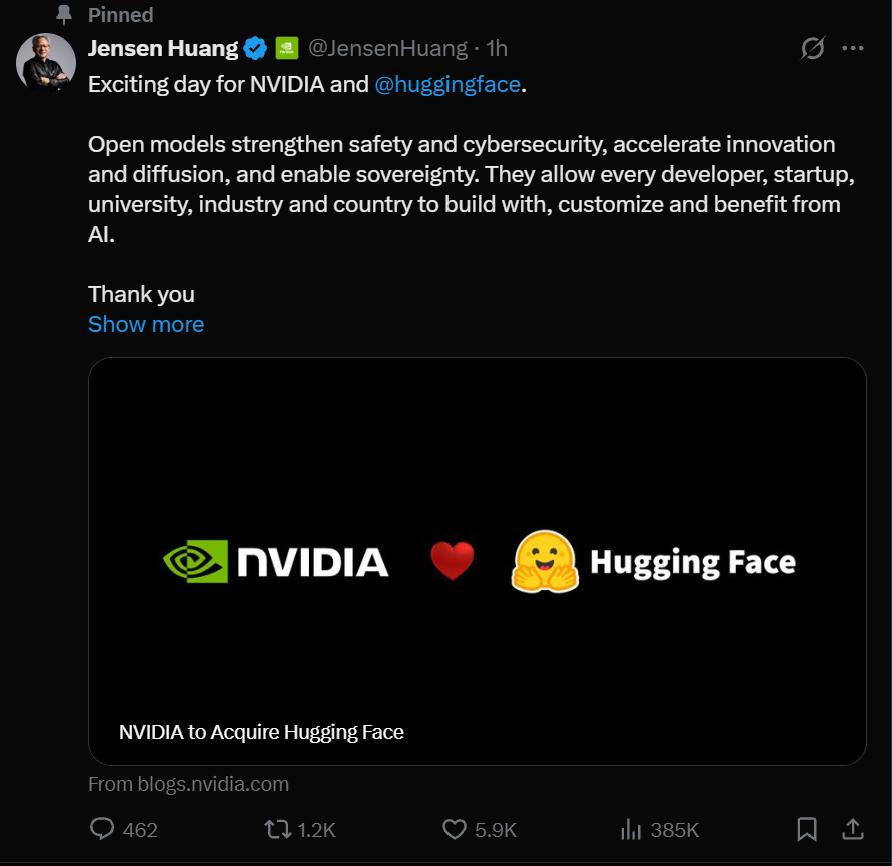
Jensen Huang, NVIDIA's CEO, announced the deal himself on X, calling it "an exciting day for NVIDIA and Hugging Face." His message was clear: open models aren't going anywhere.
What exactly is NVIDIA buying?
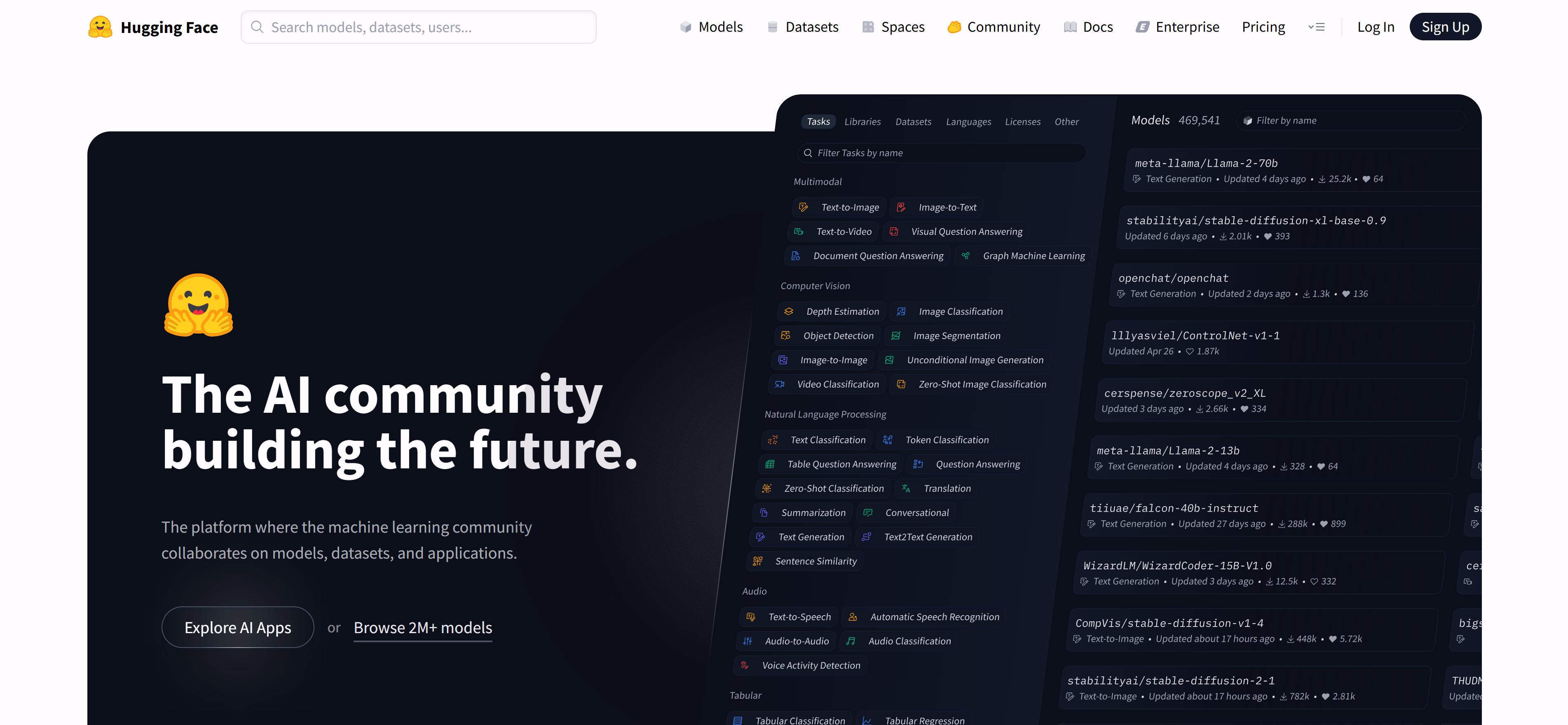
Hugging Face, founded in 2016 in New York, started as a chatbot company and pivoted into something far bigger: a repository for AI models, datasets, and applications. People in the industry call it the "GitHub of AI" — and the numbers back that up.
| Metric | Number |
|---|---|
| Developers, researchers, creators on the platform | 18 million+ |
| Models hosted | 3 million+ |
| Datasets | 500,000+ |
| Applications (Spaces) | 1 million+ |
| Companies using the platform | 200,000+ |
To put that in perspective: nearly every major open-weight model release — from Meta's Llama to Mistral to DeepSeek — lands on Hugging Face first. It's the default place developers go to find, evaluate, and deploy AI.
The price tag tells a story
Hugging Face's last public funding round was a Series D in 2023 that valued the company at $4.5 billion. NVIDIA is paying nearly 3x that three years later. The company had raised about $395 million total across six rounds, with backers including Salesforce, Google, Amazon, Intel, IBM — and NVIDIA itself, which was already an investor.
Rumors of the deal first surfaced on August 27 via The Information, but September 3 marks the official, signed agreement. The transaction is expected to close in 2027, pending regulatory approval. NVIDIA stock opened up more than 1% on the news.
The big promise: "You don't have to use NVIDIA hardware"
The question on every developer's mind is obvious: if the company that makes the GPUs owns the place where everyone downloads models, does the platform stay neutral?
Huang's answer was explicit. In his announcement, he said Hugging Face will continue to operate as an open platform for the entire AI ecosystem. Developers can choose their own models, frameworks, cloud providers, inference services, and compute platforms. Building or deploying on Hugging Face will not require NVIDIA compute.
The platform will also keep supporting open models from all developers, multi-cloud deployments, and multiple accelerator types — meaning AMD, Intel, and custom silicon aren't getting locked out.
That's a significant promise. NVIDIA's entire business rests on selling GPUs, and owning the world's biggest model distribution channel would be a powerful way to steer developers toward NVIDIA hardware. The fact that Huang is publicly committing not to do that is either a genuine strategic choice or a pre-emptive move to head off regulatory concerns. Probably both.
Why NVIDIA wants this
NVIDIA already dominates AI training. Almost every major model is trained on NVIDIA GPUs, and CUDA — NVIDIA's software platform — is the default environment for AI development. But as the industry shifts from training to inference (actually running models in production), the picture gets messier. Companies are exploring cheaper chips, custom silicon, and cloud-specific optimizations.
Owning Hugging Face gives NVIDIA a direct line into the inference side. Every time a developer picks a model and deploys it, NVIDIA has visibility into that flow. It also means NVIDIA can optimize its hardware and software for the models people actually use, rather than guessing.
There's also the data angle. Hugging Face knows which models are trending, which datasets people use, and what the developer community is building. That's intelligence no chip company can get from sales figures alone.
What this means for everyone else
For developers: The near-term impact is probably minimal. Hugging Face stays open, models stay free to download, and the platform keeps supporting non-NVIDIA hardware. The worry is longer-term — whether the platform's neutrality holds once it's fully inside a company whose core interest is selling GPUs.
For competitors: Meta, Google, Amazon, and Microsoft all have their own AI model strategies and cloud platforms. Hugging Face has been a neutral ground where all of them publish models. Now that neutral ground belongs to the company that also supplies most of their compute. That changes the negotiating dynamic, even if nothing changes technically.
For open-source AI: This is arguably the biggest test the open AI movement has faced. Hugging Face isn't just a website — it's the social infrastructure of open AI. If it remains genuinely open under NVIDIA, the deal validates open models as a strategic asset. If it drifts toward NVIDIA-first, developers will need alternatives, and fast.
The bottom line
$12.9 billion is a lot of money for a platform that gives away models for free. But NVIDIA isn't buying a product — it's buying the front door to open AI. Whether that front door stays open to everyone, or slowly starts pointing toward NVIDIA's own backyard, is the question the next couple of years will answer.
For now, Jensen Huang says the hug is for everyone. We'll see if it stays that way.
Sources: NVIDIA official blog, Jensen Huang (@JensenHuang) on X, The Information, Reuters, 第一财经, 华尔街见闻, 金十数据, 上海证券报.
No comments yet