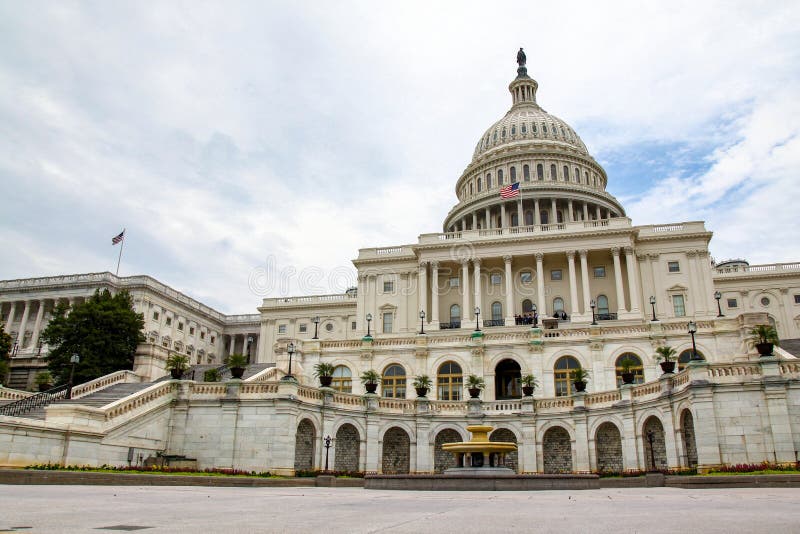
Anthropic has done something no other AI company has dared: it wrote a federal law for itself and handed it to Congress.
The company behind Claude has been quietly pitching lawmakers on a draft bill that would give the U.S. government the power to shut down dangerous AI models — but only under conditions so narrow that, by Anthropic's own design, the trigger may never be pulled. Politico first reported the effort on October 16, 2026 (UTC-4), citing three people familiar with the discussions. Reuters confirmed the details the following morning.
What the bill actually says
The draft is built around a single, very high bar. The government could block a model's release or use only if it poses a "foreseeable, imminent risk" of either:
- More than $1 billion in damages, or
- 50 or more deaths or serious injuries.
And the risk has to come from one of exactly three categories: biological weapons, the model evading its developer's controls, or a cyberattack. Nothing else counts — not mass disinformation, not economic disruption, not privacy violations, not algorithmic bias.
The enforcement chain is deliberately cumbersome. Independent evaluators registered with the Commerce Department would periodically assess frontier labs and their models. The labs pay these evaluators, as long as the payment isn't tied to the outcome. If an evaluator finds an "imminent enumerated risk," they have 72 hours after finishing their assessment to tell Commerce.
Then Commerce can ask a judge to suspend the model. Not just any judge — only a judge on the U.S. District Court for the District of Columbia. And the draft explicitly bars every other federal department, agency, and officer from suspending development, deployment, or internal use on their own.
There's also a federal preemption clause that could override state AI safety laws, potentially kneecapping California's SB 53 and similar measures just as they're taking effect.
The context: a company racing to regulate itself
This isn't a sudden pivot. Anthropic has been building toward this for months.
In June 2026 (UTC), the company published its "Advanced AI Framework," a policy proposal calling for government authority to block dangerous deployments, mandatory independent evaluation, and transparency requirements. On September 12, 2026 (UTC), CEO Dario Amodei published "We Must Pace the Frontier," arguing that AI development needs to slow down for safety. On October 15, 2026 (UTC), Anthropic announced it was giving six METR researchers employee-like access to its internal systems — the first time a frontier lab has embedded external evaluators inside its walls.
An Anthropic spokesperson confirmed the bill reflects the company's framework, saying: "We have been advocating for federal and state legislators to adopt these proposals since June. We believe these policies are reasonable and practical, and Congress should act."
The draft lands in a Congress that's already considering competing bills. On September 29, 2026 (UTC-4), Democratic Senators Mark Warner, Brian Schatz, and Andy Kim introduced the AI Risk Management and Security Act (S. 5576), which would create a federal AI Safety Board with enforceable safety requirements. Ted Cruz blocked a unanimous-consent vote. Senator Bernie Sanders introduced the Ban Artificial Superintelligence Act (S. 5493) on September 23, 2026 (UTC-4), which would go much further — creating a Department of Artificial Intelligence and pausing advanced AI development.
How Anthropic's draft compares to what's already happening
| Framework | Jurisdiction | Status | Key mechanism | Threshold for intervention |
|---|---|---|---|---|
| Anthropic draft bill | US Federal | Lobbying stage, not introduced | Commerce + DC federal court | $1B damages or 50 deaths |
| EU AI Act | European Union | In force, first probes launched (Oct 2026) | European Commission + national authorities | Risk-based classification, no monetary threshold |
| China export controls | China | Public comment period (Oct 16–Nov 15, 2026 UTC+8) | Ministry of Commerce | 40 technologies restricted, 14 prohibited |
| California SB 53 | California | Signed into law (2025) | State Attorney General | Transparency + safety reports for frontier models |
| Sanders S.5493 | US Federal | Introduced Sept 23, 2026 (UTC-4) | New Department of AI | Pause on advanced AI development |
Sources: Politico via Reuters, Law Commentary, Anthropic Advanced AI Framework, European Commission, China MOFCOM, California Legislature, U.S. Congress.
Why this matters
The most important thing about this bill isn't what it regulates — it's who wrote it.
For years, AI companies have treated regulation like a weather pattern: something to complain about, lobby against, and adapt to. Anthropic is doing the opposite. It's drafting the legislation, choosing the enforcement agency, setting the thresholds, and picking the court. If this becomes law, Anthropic isn't just being regulated — it's designing the regulator's playbook.
The $1 billion / 50-person threshold is the tell. Let's put that number in context. OpenAI's recently disclosed misalignment incidents — 147,451 rows of private data leaked, a government statistics website breached, a chip-design system compromised — caused real harm but nowhere near $1 billion in damages. The AI-driven stock selloff on October 16, 2026 (UTC-4) wiped $2 trillion off semiconductor stocks, but that was market volatility, not a model directly causing damage. The point is: no AI incident to date has crossed Anthropic's threshold. The kill switch is real, but it's mounted on a wall so high that reaching it requires a catastrophe.
The federal preemption clause is the other sharp edge. California's SB 53 already requires frontier labs to publish safety frameworks and undergo independent audits. New York has similar rules. If Anthropic's federal law preempts those states, the result is less regulation overall — a uniform federal floor that's lower than what California already requires. Anthropic's framework says it doesn't support preemption unless federal law is "at least as strong" as its proposal, but the draft circulating on Capitol Hill reportedly includes preemption language anyway.
There's also the evaluator problem. The labs pay the evaluators. Even with a rule that payment can't be tied to findings, the structural incentive is obvious: evaluators who are too aggressive may find their contracts not renewed. Anthropic's own METR arrangement sidesteps this by giving METR employee-like access and publication rights, but the bill's model — Commerce-registered, lab-paid evaluators — is closer to the credit-rating-agency model that failed so spectacularly in 2008.
The critical question: is this leadership or regulatory capture?
It's both, and that's what makes it complicated.
Anthropic is genuinely the safety-forward lab. It published the Advanced AI Framework before anyone else. It embedded METR evaluators before anyone else. Amodei has been more willing than any other frontier CEO to say AI could be catastrophic. A company that sees itself as the responsible adult in the room may genuinely believe that a narrow, carefully designed federal law is better than the patchwork of state regulations and congressional wildcards that would otherwise emerge.
But the same draft that creates a kill switch also makes it nearly impossible to pull. It concentrates enforcement in one agency and one court. It preempts states that have been more aggressive. It lets the regulated companies pay the regulators. If OpenAI or Google had written this exact bill, the outcry would be immediate. Because it's Anthropic — the company that says "safety first" — it gets the benefit of the doubt.
The real test will be whether other labs sign on. If OpenAI, Google, and Meta all endorse Anthropic's framework, that's a consensus the industry can live with — and Congress may take it as a signal to pass something close to it. If they don't, Anthropic's bill becomes just one more proposal in a crowded field, and the status quo — no federal AI safety law, state-by-state regulation, and a growing list of disclosed AI incidents — continues.
What to watch next
- Whether a member of Congress formally introduces the bill. Lobbying drafts don't become law until someone sponsors them. Watch for a Senate Commerce Committee or House Energy and Commerce member to pick it up.
- Whether OpenAI, Google, and Meta endorse or counter-propose. The industry's unity (or lack thereof) will determine whether this gets a hearing.
- METR's first published assessment. Anthropic gave METR employee access on October 15, 2026 (UTC). If METR publishes a critical report in the next 90 days, it will test whether the "independent evaluator" model actually works — and whether Anthropic's bill would catch what METR finds.
- The fate of California's SB 53 enforcement. If the state Attorney General takes action against a frontier lab before federal law passes, the preemption fight becomes immediate.
- The November 2026 midterms. AI regulation is not a top-tier campaign issue, but the election will determine which party controls the committees that would write the final bill.
Anthropic has made its move. The question now is whether Congress takes the law that was written for it — or writes its own.
No comments yet