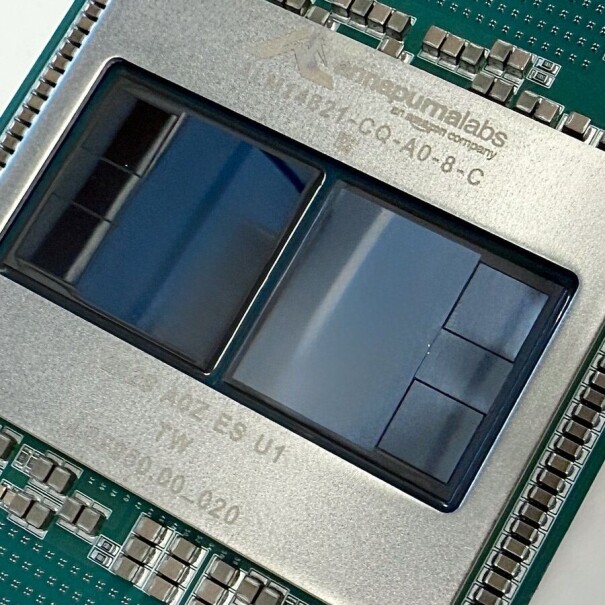
Amazon is in talks to acquire Israeli AI startup Decart for roughly $7 billion, according to a Wall Street Journal report published on October 11, 2026 (UTC-4). The deal — if it closes — would be one of the largest AI infrastructure acquisitions of the year, and it tells you exactly where the next battle in AI compute is being fought: not in models, but in the software layer that decides which chips those models run on.
The deal, as reported
Neither Amazon nor Decart has confirmed the agreement. Reporting indicates the talks could still fall apart, or another bidder could emerge. But the numbers are striking enough to matter regardless.
| When | Event | Value |
|---|---|---|
| 2023 | Decart founded by Dean Leitersdorf, Orian Leitersdorf, and Moshe Shalev | — |
| May 2026 | $300M round, Radical Ventures leads, Nvidia participates | ~$4B |
| Aug 2026 | Anthropic becomes preferred bidder | ~$6–7B |
| Sept 2026 | Anthropic withdraws after completing due diligence | — |
| Oct 2026 | Amazon enters talks (WSJ) | ~$7B |
That is roughly a 75% valuation jump in five months, on a three-year-old company with no public revenue figures. Decart has raised about $450 million in total.
What Decart actually builds
Decart has two product lines, and only one of them explains a $7 billion price tag.
The infrastructure software is the real asset. It makes AI models run more efficiently and — critically — lets them move between chips from different manufacturers without a rewrite. In practice that means getting more useful compute out of hardware you already own, and not being locked to one vendor's silicon.
The other products — Lucy, a real-time video editor, and Oasis, which generates interactive simulated environments — are technically interesting but almost certainly not the reason Amazon is writing the check.
Why Amazon wants this
AWS was already a strategic Decart customer. The cloud giant gave Decart early access to its Trainium3 chip in 2025, a relationship that predates any acquisition talk and tells you precisely what Amazon values.
Amazon designs its own AI silicon. The single largest obstacle to anyone adopting it is that the entire machine learning ecosystem is built around Nvidia's CUDA. Software that moves workloads across architectures without a rewrite attacks that obstacle directly.
The detail worth sitting with: Nvidia participated in Decart's $300 million round in May 2026. If Amazon buys Decart and uses it to make Trainium a credible alternative, Nvidia will have helped fund the company whose software loosens its own grip. That is not a prediction about what happens — it is simply what the cap table and the product do when you put them next to each other.
The Anthropic question
Anthropic was the preferred bidder in August at a reported $6 to $7 billion. It completed due diligence. In September it walked away. No reason has been made public.
Three readings are available, and the honest position is that we cannot tell which is right. Something may have turned up in diligence — the ordinary reason bidders walk after looking at the books. Or the strategic fit was weaker than it looked: chip-portability software is worth far more to a company with its own silicon than to one that only buys compute. Amazon has Trainium; Anthropic does not make chips. The same asset is simply worth more to Amazon. Or it was a capital allocation call — $7 billion is a different proportion of Anthropic's balance sheet than of Amazon's.
The second reading is the most economically coherent, and also the least dramatic. Buyers walk away from good companies regularly, for reasons that have nothing to do with the company.
Why it matters
This acquisition is not really about Decart. It is about the stack.
For the past three years, the AI infrastructure conversation has been dominated by one question: who can get enough Nvidia GPUs? That is changing. The hyperscalers — Amazon, Google, Microsoft — have all concluded that buying every chip from a single supplier is both expensive and strategically fragile. Each is building its own silicon: Amazon's Trainium, Google's TPU, Microsoft's Maia. The problem has never been the hardware. It has been the software. Moving a production workload from CUDA to a custom accelerator has historically meant rewriting kernels, retesting, and accepting performance regressions. Decart's pitch is that it can make that transition painless.
If that pitch is real — and Amazon's willingness to pay $7 billion suggests it takes the possibility seriously — the competitive dynamics shift. AWS customers get a credible path to running existing workloads on Trainium without rewriting them. That is a cost argument, and cost arguments move slowly but do not reverse. Every percentage of workload that migrates off Nvidia is revenue that does not come back.
The numbers frame the stakes. Nvidia's data center revenue run rate is measured in hundreds of billions of dollars annually. Amazon's capital expenditure on AI infrastructure is similarly enormous. A tool that lets Amazon substitute even 10–20% of its Nvidia spend with in-house silicon pays for a $7 billion acquisition many times over.
The critical view
There are reasons to be skeptical.
First, this is still a rumor. The WSJ cites people familiar with the matter. Neither company has confirmed anything. Talks at this stage can and do collapse.
Second, chip portability is a problem that has been "solved" many times before. OpenCL, oneAPI, ROCm — every attempt to abstract away CUDA has run into the same wall: Nvidia's tooling is a decade of accumulated optimization, and parity is hard. Decart may have a genuinely better approach, but the history of this space is littered with companies that promised portability and delivered compromise.
Third, the valuation trajectory is aggressive. A 75% jump in five months, on a company with no public revenue, can look like either correct pricing for a strategically critical asset or the top of a cycle. Both have looked identical from the inside every time.
Fourth, acquisitions of neutral infrastructure rarely leave it neutral. If Decart becomes an Amazon product, the interesting question is whether its portability layer stays available to non-AWS customers — including competitors like Google Cloud and Microsoft Azure. The answer will determine whether this is a tool for the whole industry or a moat for AWS alone.
What to watch
The next signals are concrete. Watch for an official announcement from Amazon — or for silence, which would mean the talks fell through. If the deal closes, watch whether Decart's software remains available to non-AWS customers. And watch AWS's Trainium adoption metrics over the next two quarters: if Decart's technology is working, you should see a measurable uptick in Trainium usage among existing AWS customers who previously ran everything on Nvidia.
The broader prediction: by the end of 2027, at least two of the three major hyperscalers will be running more than 30% of their AI inference workloads on custom silicon rather than Nvidia GPUs. Decart — or companies like it — will be the reason that transition happens faster than Nvidia expects.
No comments yet