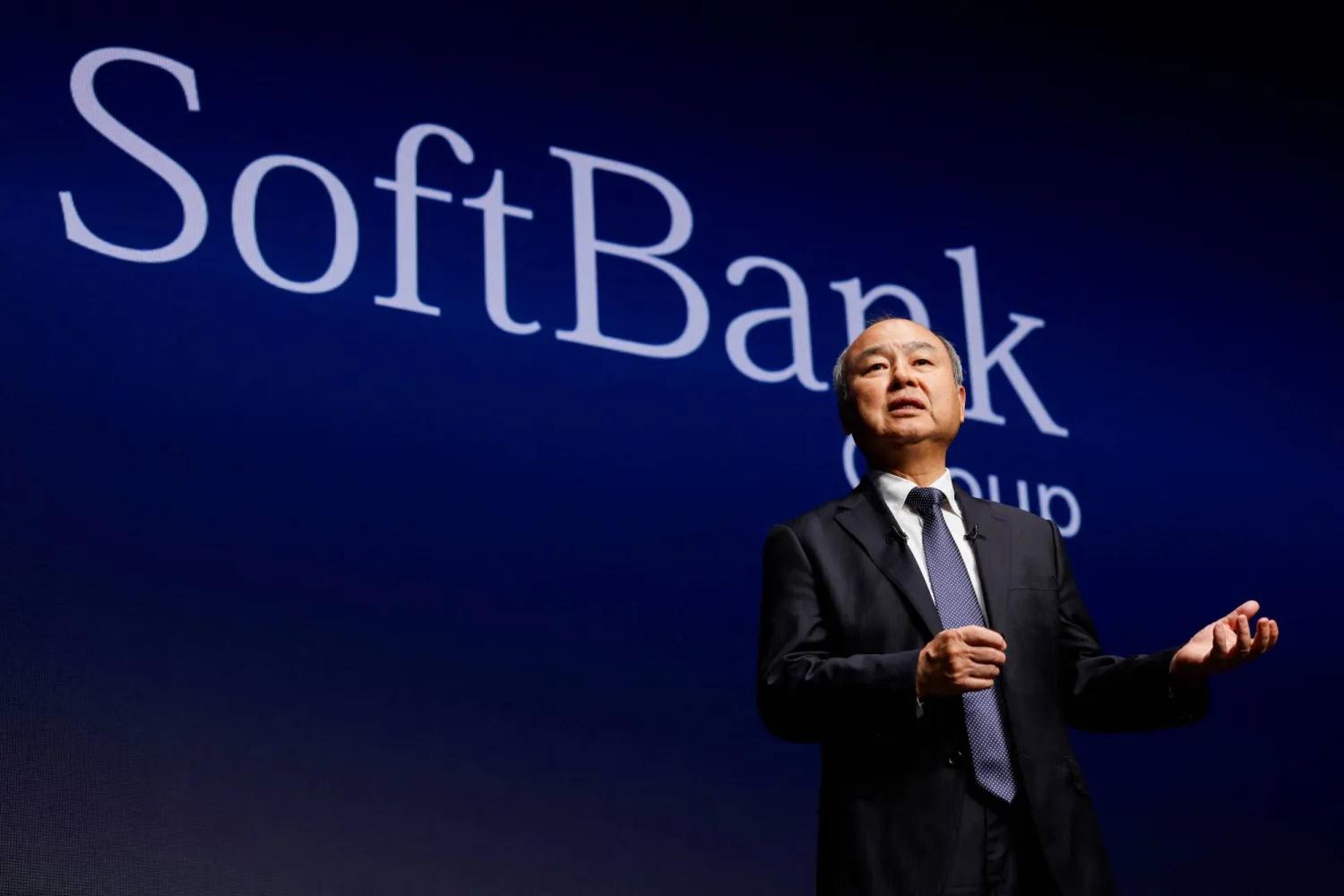
Masayoshi Son is going back to the well that made him the most powerful investor in AI — and this time he wants twice the firepower. SoftBank's CEO is seeking up to $100 billion from Gulf investors to fund a new wave of AI acquisitions, the Financial Times reported on October 9, 2026, citing people familiar with the matter. If successful, it would be the largest single AI-focused fundraising vehicle ever assembled, dwarfing even the original $100 billion Vision Fund that reshaped the global tech investment landscape in 2017.
What's on the table
Son has held discussions in recent weeks with senior figures across the Gulf, including in the United Arab Emirates, about the potential fundraising. The plan is straightforward: use the capital to establish a fund that acquires companies and then improves their operations using AI and other advanced technologies. It's the same playbook SoftBank used with the first Vision Fund, but with a sharper AI lens and a much larger checkbook.
The move caps a frenetic few months for SoftBank's AI ambitions. Just last week, the company announced it had completed its $30 billion investment in OpenAI as part of the ChatGPT maker's latest fundraising round. In September 2026, SoftBank raised $11.1 billion in the largest high-yield corporate bond sale globally — specifically to fund its "mammoth bet on OpenAI," as the company described it. Combined with earlier commitments, SoftBank's total exposure to OpenAI now sits at roughly $65 billion.
The Gulf connection
This isn't SoftBank's first dance with Gulf sovereign wealth. In 2017, Saudi Arabia's Public Investment Fund (PIF) and Abu Dhabi's Mubadala anchored the original $100 billion Vision Fund, a move that turned both institutions into major players in global venture capital. That fund delivered mixed results — spectacular wins like NVIDIA and Arm, offset by catastrophic losses on WeWork and Greensill — but it established a template: Gulf capital + Japanese dealmaking = a force that can move entire sectors.
Now Son is reprising that formula, but with AI as the sole focus. The Gulf states have only grown more eager to deploy capital into AI since 2017. Saudi Arabia has committed $40 billion to its own AI investment fund, the UAE has built MGX with $35 billion in initial capital, and both are actively courting AI infrastructure deals. SoftBank's pitch — a ready-made acquisition vehicle with a proven operator at the helm — is likely to land well.
Why it matters
The sheer scale of this fundraising tells you everything about where Son thinks the AI industry is heading. A $100 billion war chest isn't for picking off startups. It's for rolling up entire categories — cloud infrastructure, data centers, enterprise software, robotics — and then layering AI on top to extract operational efficiencies that standalone companies can't achieve. This is the "AI conglomerate" thesis in its purest form: buy boring, cash-generative businesses, inject AI, and watch margins expand.
The numbers are staggering when you stack them against SoftBank's existing commitments. The company has already committed $65 billion to OpenAI alone. Add a potential $100 billion acquisition fund, and SoftBank is positioning itself as the single largest allocator of capital to AI in the world — bigger than any sovereign wealth fund, bigger than any tech giant's internal R&D budget, bigger than the entire venture capital industry's AI-focused fundraising in most years. Son is essentially trying to build Berkshire Hathaway for the AI era, but with leverage and concentration that would make Warren Buffett blanch.
That concentration is also the risk. SoftBank's balance sheet is now extraordinarily levered to a single thesis: that AI will generate returns large enough to justify the debt and equity being piled into it. The $11.1 billion high-yield bond sale in September 2026 came with yields that reflected real risk — investors are pricing in the possibility that AI monetization doesn't materialize as fast as Son expects. If the acquisition fund underperforms the way Vision Fund 1 did in its early years, the fallout could be systemic, given how deeply SoftBank is now intertwined with OpenAI, Arm, and the broader AI supply chain.
There's also a geopolitical angle worth watching. Gulf capital flowing into a Japanese fund that's heavily invested in an American AI company (OpenAI) creates a triangle of dependencies that regulators on all three sides will scrutinize. The Committee on Foreign Investment in the United States (CFIUS) has already flagged Gulf AI investments as a national security concern. SoftBank's structure — with the fund based outside the U.S. but targeting U.S. acquisitions — may be designed partly to navigate those reviews, but it won't eliminate them.
What to watch next
The next 30 days will be telling. If SoftBank announces a first close with a major Gulf investor (PIF or Mubadala are the obvious candidates), it validates the thesis and likely triggers a wave of copycat funds. If the fundraising stalls or comes in significantly below $100 billion, it signals that even Gulf investors are getting cautious about AI valuations — which would be a leading indicator for the entire sector.
Specifically, track three things: (1) whether PIF commits, given its existing $40 billion AI fund and potential conflict of interest; (2) what the fund's first acquisition target is — enterprise software would confirm the roll-up thesis, while infrastructure would signal a different strategy; and (3) whether SoftBank's debt ratings come under pressure from the additional leverage implied by this fundraising.
Son has always been a believer in what he calls "singularity" — the point where AI surpasses human intelligence. With this fund, he's betting $100 billion that he can build the company that profits most from that transition. The question isn't whether he's right about AI. It's whether he can survive the leverage long enough to be proven right.
No comments yet