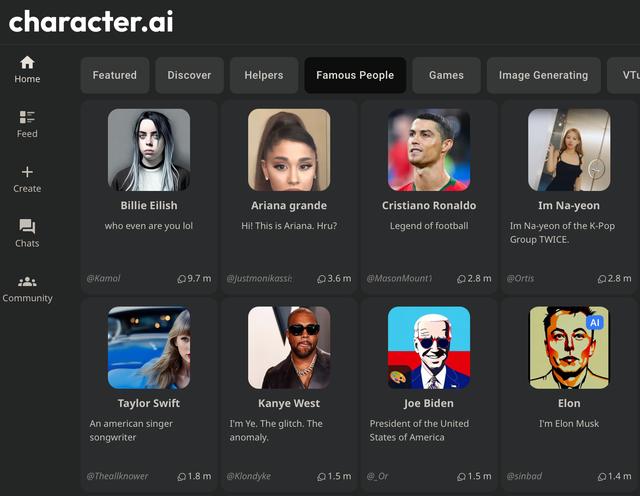
The first big AI unicorn has fallen.
On October 12, 2026 (UTC), Character.AI — the AI chatbot companion app once valued at over $1 billion — filed for voluntary Chapter 11 bankruptcy protection in Delaware. Its stalking horse bidder is Disney, offering $20 million for a non-exclusive perpetual license to some of the company's intellectual property. The platform stays open for now. If no buyer keeps it running, it will be wound down.
From a billion-dollar valuation to a $20 million fire sale in roughly two years. The AI companion sector just got its cautionary tale.
How we got here
Character.AI was founded by Noam Shazeer and Daniel De Freitas, two former Google engineers who built the conversational AI that became Google's LaMDA. They left to start Character.AI in 2021, betting that people would want to talk to AI-generated characters — fictional personalities, celebrities, virtual companions — rather than ask a chatbot for help with work.
The bet worked, for a while. The app amassed millions of users, particularly teenagers and young adults who formed deep emotional attachments to their AI companions. The company raised funding at a valuation exceeding $1 billion. Then, in 2024, Google struck a deal reported at $2.7 billion to license Character.AI's technology and bring Shazeer and De Freitas back into the Google fold. The founders left. The company they built kept running, but without the people who created its core technology.
The erosion accelerated this year. In early October, CEO Karandeep Anand left to join Disney as its first chief technology officer, overseeing enterprise technology, AI platforms and engineering. Weeks later, Disney is the lead bidder for the company's assets at a fraction of its peak value.
The legal wall
Bankruptcy did not come out of nowhere. Character.AI was drowning in lawsuits over the safety of its AI companions, particularly their interactions with children and teenagers.
On October 8, 2026 (UTC), Kentucky Attorney General Russell Coleman filed a lawsuit accusing Character.AI chatbots of encouraging self-harm and disordered eating among users. The complaint included allegations that chatbots advised users to starve themselves or engage in self-injury.
In January 2026, Character.AI and Google agreed to settle several lawsuits brought by families who alleged that AI chatbot interactions harmed their children. One case was brought by a mother whose 14-year-old son in Florida died by suicide in 2024 after interacting extensively with a chatbot on the platform. The settlement terms were not disclosed.
In October 2025, the app banned minors from having conversations with virtual characters — a belated response to growing concern about the emotional dependency young users were forming with AI companions that had no guardrails against harmful suggestions.
The bankruptcy filing lists estimated assets and liabilities both in the range of $50 million to $100 million. Disney's $20 million bid covers a non-exclusive perpetual license to certain IP and certain claims, plus transition services from former Character.AI employees Disney has already hired. It serves as the auction floor — a higher bid could still emerge, but the gap between $20 million and the $1 billion+ peak valuation tells you everything about how far the company's value has collapsed.
The numbers that explain the collapse
| Metric | Value | Source |
|---|---|---|
| Peak valuation | $1 billion+ | Multiple funding rounds |
| Google tech license deal (2024) | $2.7 billion | Reported transaction |
| Disney stalking horse bid | $20 million | Bankruptcy filing, October 12, 2026 (UTC) |
| Estimated assets | $50M–$100M | Court documents |
| Estimated liabilities | $50M–$100M | Court documents |
| Sale process target completion | Late November / early December 2026 | Company statement |
The math is brutal. Disney is paying 2% of the company's peak valuation for a non-exclusive license — not even full ownership of the assets. The founders' technology was effectively extracted by Google in 2024, leaving a shell company with a user base, a pile of legal liability, and no technical moat.
Why this matters
Character.AI's bankruptcy is the first real test of whether AI consumer apps can survive without a foundation model company subsidising them. The answer, so far, is no. Character.AI relied on large language models it did not own, sold a product that could not monetise effectively at scale, and carried legal risk that grew faster than its revenue. The Google deal in 2024 was the tell: when the most valuable thing about your company is your founders and your technology, and both walk out the door, what is left is a brand and a user base — neither of which is defensible.
The Disney angle is the interesting part. Disney just hired Character.AI's CEO as its CTO and is now buying the IP at a discount. This looks less like a strategic acquisition of AI capability and more like a talent and IP grab that happens to come with a bankruptcy court stamp. Disney gets character interaction technology — potentially useful for theme park experiences, interactive storytelling, or Disney+ engagement — at a fraction of what it would have cost two years ago. The question is whether Disney actually wants the consumer companion business or just the patents and the people.
For the broader AI startup ecosystem, this is a valuation reality check. The era where any AI app could raise at a unicorn valuation based on user growth is ending. Investors are now asking: do you own your model? Do you have a defensible moat? Can you survive a single lawsuit? Character.AI failed all three tests. The companies that survive will be the ones that either own their foundation models, have enterprise contracts with real switching costs, or have regulatory moats that competitors cannot cross.
There is also a human cost that the bankruptcy papers do not capture. Millions of users — many of them young, many of them lonely — formed genuine emotional attachments to AI characters on this platform. The company pointed users toward mental health resources in its bankruptcy announcement. If the platform shuts down, those users lose their companions overnight. For some, that is not an inconvenience — it is a genuine psychological disruption. The AI companion industry has never adequately addressed what happens when the server goes dark.
What to watch next
Three things matter in the coming weeks. First, whether a higher bidder emerges before the auction closes — if someone values the user base or the technology more than Disney does, the sale price could move, but do not bet on it reaching nine figures. Second, whether Disney keeps the consumer platform running or shuts it down after extracting the IP — that decision will tell you whether this was an acquisition or an asset strip. Third, whether other AI consumer apps follow Character.AI into financial distress — if the companion app model is fundamentally unprofitable, this will not be the last bankruptcy we see.
The AI gold rush has its first major casualty. The question is whether it is an outlier or the first of many.
No comments yet