
China just did to AI what the US has been doing to chips for three years.
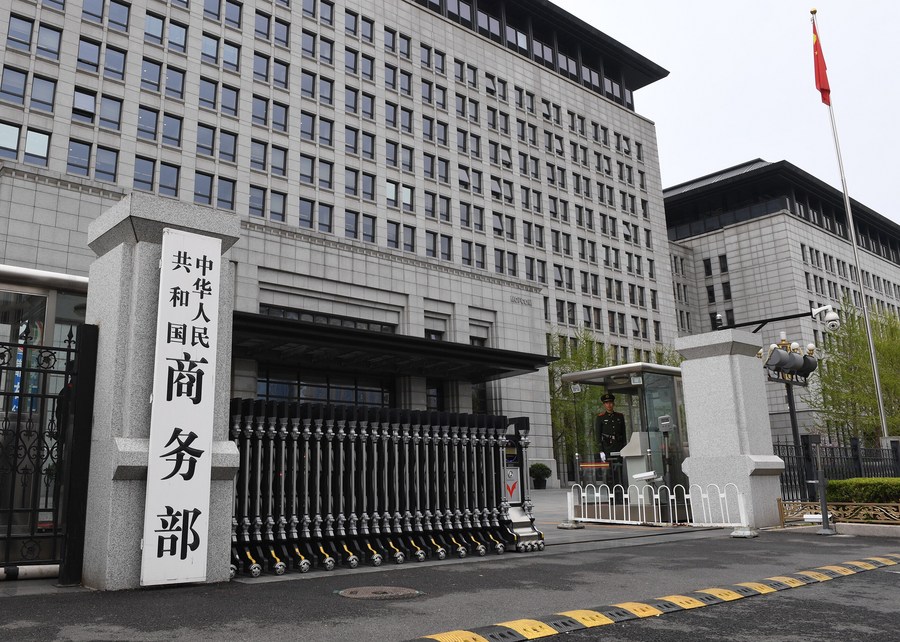
On October 16, 2026 at 16:00 (UTC+8), China's Ministry of Commerce and Ministry of Science and Technology jointly published a draft revision to its Catalogue of Prohibited and Restricted Export Technologies, adding 40 technologies across AI, biomedicine, and photovoltaics. Twenty-three of them are AI-related — covering large models, intelligent agents, computing clusters, and information processing. For the first time, China is explicitly placing frontier AI technology under export control.
The move isn't subtle. It comes after years of US restrictions on AI chips to China, and it signals that Beijing is done playing defense on technology transfer. The message: if you can't sell us the hardware, we're not selling you the software.
What's actually controlled
The draft splits the 23 AI technologies into two buckets. Fourteen go on the prohibited list — meaning they can't be exported at all. These include core technologies of AI large models trained on "national key sensitive data" and AI agents that serve critical information infrastructure, national defense, or core government affairs.
The remaining 26 additions across all three sectors go on the restricted list — exportable with a license. For AI, this includes 2.5D and 3D AI chip design technology, 3D flash memory design, AI information processing technologies, and voiceprint recognition.
The critical carve-out, and the reason this matters less than the headlines suggest, is the public domain exemption. Technologies that have already entered the public sphere through open source, published academic papers, or other means are explicitly excluded. That means DeepSeek's open-weight models, Qwen's Apache-licensed releases, and any model weights already on Hugging Face are grandfathered in.
China's commerce ministry was also precise about what doesn't count as a technology export. Providing API access, SaaS applications, or lightweight on-device deployment to overseas customers — the actual business models most Chinese AI companies use abroad — does not trigger export control. The regulation targets the transfer of technology ownership and source code, not the delivery of AI services.
The timing tells the story
This isn't happening in a vacuum. The US has progressively tightened AI chip exports to China since October 2022, cutting off access to Nvidia's H100 and H200, then the A800 and H800 workarounds, and most recently restricting the H20. China's domestic AI companies have been training models on Huawei Ascend chips and custom silicon, but the gap with Nvidia remains real.
By putting AI software on its own export control list, China is creating leverage. If a future US administration wants Chinese companies to keep open-sourcing model weights — a practice that has genuinely accelerated global AI progress — it now has something to negotiate over. The implicit threat: restrict our chips further, and we'll restrict the models that the rest of the world builds on.
Bloomberg reported the proposal on October 16 (UTC-4), noting that it could restrict overseas transfer of AI models and chips. The draft is open for public comment through November 15, 2026 (UTC+8), and a provisional registration requirement takes effect immediately — companies exporting listed technologies must register with the commerce ministry before the final rules take effect.
Why it matters — and why the open source loophole is the real story
The most important sentence in the entire announcement is the exemption. By excluding open-source and publicly published technologies, China is making a deliberate choice: it won't unwind the open AI ecosystem that Chinese companies have done so much to build. DeepSeek-R1, Qwen3, and GLM are all out in the wild, and pulling them back would be impossible even if Beijing wanted to.
What the regulation does control is the stuff that isn't public yet — the next generation of models trained on sensitive domestic data, the agent frameworks built for government and critical infrastructure, and the chip design know-how that China has been developing as an alternative to Nvidia. Those are the technologies China doesn't want leaving the country.
For the global AI industry, this creates a two-tier system. Open weights and API services flow freely. Proprietary model architectures, training data pipelines, and agent infrastructure built for sensitive use cases do not. Companies that have been betting on Chinese AI as a cheap alternative to OpenAI and Anthropic need to understand which tier their suppliers sit in.
The risk is escalation. If the US responds by further restricting chip access, China could narrow the open-source exemption — and that would be a genuine shock to the global AI ecosystem. The entire open-weight AI movement, from Llama to Mistral to DeepSeek, depends on the free flow of model weights across borders. Once one major power starts treating model exports like weapons, the others will follow.
What to watch
Three things will determine whether this is a negotiating posture or the beginning of a real split. First, does the final regulation after the November 15 comment period narrow or broaden the open-source exemption? Second, do DeepSeek, Qwen, or Zhipu announce any changes to their open-source release schedules — either pulling back or, conversely, rushing more models into the public domain before the rules finalize? Third, does the US Bureau of Industry and Security respond with new chip restrictions, or does it treat this as a signal to reopen dialogue?
China has spent years positioning itself as the champion of open AI. This regulation doesn't reverse that — but it puts a fence around the parts of the stack that Beijing considers strategic. The open-source loophole is wide open today. The question is whether it stays that way.
No comments yet