Microsoft just trained a 2.8-trillion-parameter AI model in-house, and its AI chief is telling employees it outperforms the system that powers GPT-5.6 Sol — using only a quarter of the compute. If that claim holds up, it changes the math of the entire frontier race.
What Microsoft actually announced
On October 15, 2026 (UTC), Microsoft AI published a blog post confirming that pre-training on MAI-Base-2 is complete. The numbers are substantial:
| Dimension | MAI-Base-2 | DeepSeek-V4-Pro-Base |
|---|---|---|
| Total parameters | 2.8 trillion | 1.6 trillion |
| Active parameters | 80 billion | 49 billion |
| Architecture | MoE, every layer, encoder-free VLM | MoE + Hybrid Attention (CSA+HCA) |
| Training hardware | 16,000 Nvidia GB200 GPUs | Not disclosed |
| Training duration | 38 days (Aug–Sep 2026) | Not disclosed |
| Training data | 50 trillion tokens (18% vision) | 32T+ tokens |
| Knowledge cutoff | March 2026 | Early 2026 |
| FLOPs efficiency vs DeepSeek | 4.2–12.3x higher | 1x (baseline) |
| Status | Post-training in progress | Open source (Apr 2026) |
| Independent benchmark verification | None — self-reported | Community-verified |
Source: Microsoft AI blog (Oct 15, 2026 UTC), DeepSeek V4 model card
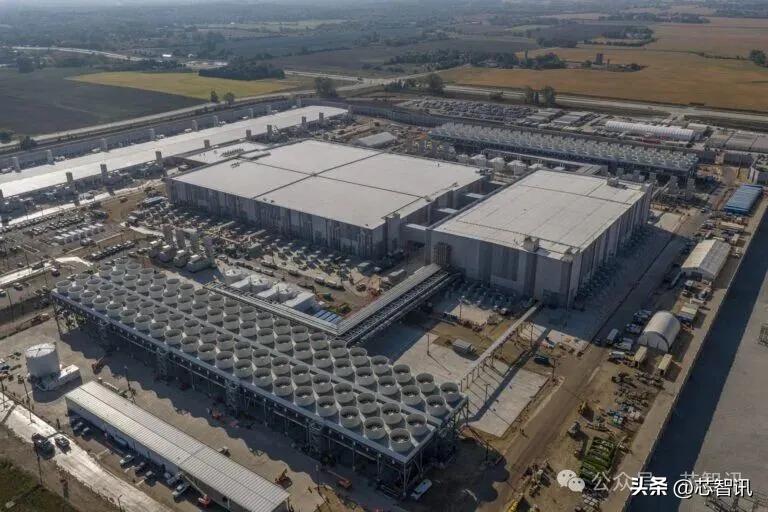
The model was trained on 16,000 GB200s over 38 days with 21% model FLOPs utilization and 89% goodput. It is natively multimodal — no separate vision encoder — with 4.5 trillion unique vision tokens making up 18% of the training mixture. Microsoft explicitly states it used no distillation from other models, relying entirely on its own data pipelines.
The Suleyman claim
The official blog post only benchmarks MAI-Base-2 against open-weight models. But in a company town hall on October 15, 2026 (UTC-7), Microsoft AI CEO Mustafa Suleyman went further. According to Business Insider and TechCrunch, he told employees that MAI-Base-2's pre-trained base model outperforms the model that powers GPT-5.6 Sol — internally codenamed "Spud" — on tests measuring understanding and pattern prediction.
"We now have a stronger pre-trained base model than the model that currently powers GPT 5.6 Sol," Suleyman said, per the reports. "And in fact, we used one-quarter of the compute that OpenAI used to train their model."
He added that Microsoft had compared MAI-Base-2 "privately and confidentially" against OpenAI's models, suggesting Microsoft has access to non-public performance data about its partner's systems.
How they got there
The technical meat of Microsoft's post is about efficiency, not raw scale. Three innovations stand out:
Dropless MoE with fixed memory. Microsoft redesigned its Mixture-of-Experts implementation to handle token routing imbalance without dropping tokens or wasting memory. This pushed MoE layer MFU from 24% to 35%, making it efficient enough to use MoE in every layer — MAI-Base-1 had only used MoE in alternating layers.
Muon optimizer at scale. The Muon optimizer, which orthogonalizes momentum matrices, delivered more stable training than AdamW. After extensive communication-computation overlap optimizations, it consumed only 2.1% of each training iteration — compared with a theoretical minimum of 55ms bottlenecked by communication.
Activation gradient clipping. Instead of clipping the global gradient norm (which punishes well-behaved examples when one outlier appears), Microsoft clips activation gradients at specific network points. This kept gradient norms in a tighter range and also served as a data-quality diagnostic — one clipped example traced back to a bug in the code preprocessing pipeline that cut off license headers mid-sentence.
The result: a training recipe that is 4.2–12.3x more FLOPs-efficient than DeepSeek-V4-Pro-Base across four held-out evaluations, and 6.3–12.7x more efficient than MAI-Base-1 from June 2026.
Why it matters
The strategic significance is hard to overstate. Microsoft is OpenAI's largest investor, its exclusive cloud provider, and reportedly holds a stake worth well over $100 billion. For years, every Copilot feature, every Azure AI Foundry model, every enterprise AI sale has run on OpenAI's technology. MAI-Base-2 is the clearest signal yet that Microsoft is building a genuine alternative.
Suleyman's pitch — repeated in public for months — is that frontier training compute has grown roughly a trillion-fold since 2010, but that brute-force scaling is hitting diminishing returns. If Microsoft can match OpenAI's base model quality with 75% less compute, the cost structure of the entire industry shifts. A 4x efficiency gain means a model that would cost $400 million to train at OpenAI's recipe costs $100 million at Microsoft's. At frontier scale — where training runs routinely exceed $100 million — that is real money.
The timing is also pointed. OpenAI's GPT-6 Sol and Luna launched to all ChatGPT users on October 7, 2026 (UTC), replacing GPT-5.6 in the consumer product. Anthropic's Claude Opus 5.5 arrived on September 22, 2026 (UTC). Google's Gemini 4 Argon opened to everyone on October 13, 2026 (UTC). The frontier is crowded, and Microsoft — long the quiet infrastructure provider — is now explicitly competing on model quality.
The caveats
Before declaring a paradigm shift, several qualifications matter.
All benchmarks are self-reported. Microsoft ran its own held-out evaluations, commissioned STEM/Math/Q&A tests from vendors, and decontaminated against its training data. No independent lab has reproduced the DeepSeek efficiency comparison or the GPT-5.6 claim. The blog post's Figure 1 — showing MAI-Base-2 achieving lower bits-per-byte than every compared model — uses Microsoft's own evaluation suite.
The GPT-5.6 comparison comes from an internal town hall, not the official post. Suleyman's "one-quarter the compute" and "stronger base model" claims were made to employees and reported by Business Insider and TechCrunch. They are not in Microsoft's published technical document. The comparison was based on "technical information Microsoft has about OpenAI's models" — which, given the partnership, may be substantial but is not independently verifiable.
Pre-training is not a product. MAI-Base-2 is in post-training. It is not in Copilot, not in Azure AI Foundry, not available via API. Microsoft says it will share more results "soon" and plans to license weights through Foundry, but there is no timeline. The gap between a strong base model and a production-ready assistant is where alignment, tool use, safety guardrails, and reliability get built — and that is where OpenAI has invested heavily.
OpenAI's base model is not the same as GPT-5.6 Sol. Suleyman compared MAI-Base-2 to the base model behind GPT-5.6 Sol, not to the post-trained product. Base model quality on next-token prediction does not directly translate to chatbot performance, coding ability, or agentic reliability.
What to watch
Three concrete indicators will tell us whether MAI-Base-2 is a genuine inflection point or a well-timed press cycle:
-
Third-party benchmarks within 60 days. If MAI-Base-2 (or its post-trained successor) appears on Artificial Analysis, LMSYS Chatbot Arena, or LiveCodeBench and matches GPT-5.6 Sol or Claude Opus 5.5, the efficiency claim becomes real. If it only appears in Microsoft's own evaluations, treat it as aspirational.
-
Copilot migration. Microsoft has not said whether MAI-Base-2 will power Copilot. If enterprise Copilot deployments start offering a "Microsoft-native model" option alongside GPT-5.6, that is the real test of production readiness. If MAI-Base-2 stays in Foundry as a niche offering, the OpenAI dependency remains intact.
-
OpenAI's response. OpenAI has its own efficiency work — the Jalapeño inference engine, GPT-6's improved cost-performance — and a $122 billion funding round. If OpenAI publicly counters with its own efficiency data or accelerates GPT-7 training, it validates the competitive pressure. Silence may mean the claim doesn't worry them.
The deeper question is whether Microsoft can sustain this trajectory. MAI-Base-3 is already in preparation. If each generation delivers 6x+ efficiency gains while scaling parameters, the company that owns the cloud and the chips and the model stack becomes structurally difficult to compete with. But that is a lot of "ifs" — and the frontier has a way of humbling confident predictions.
No comments yet