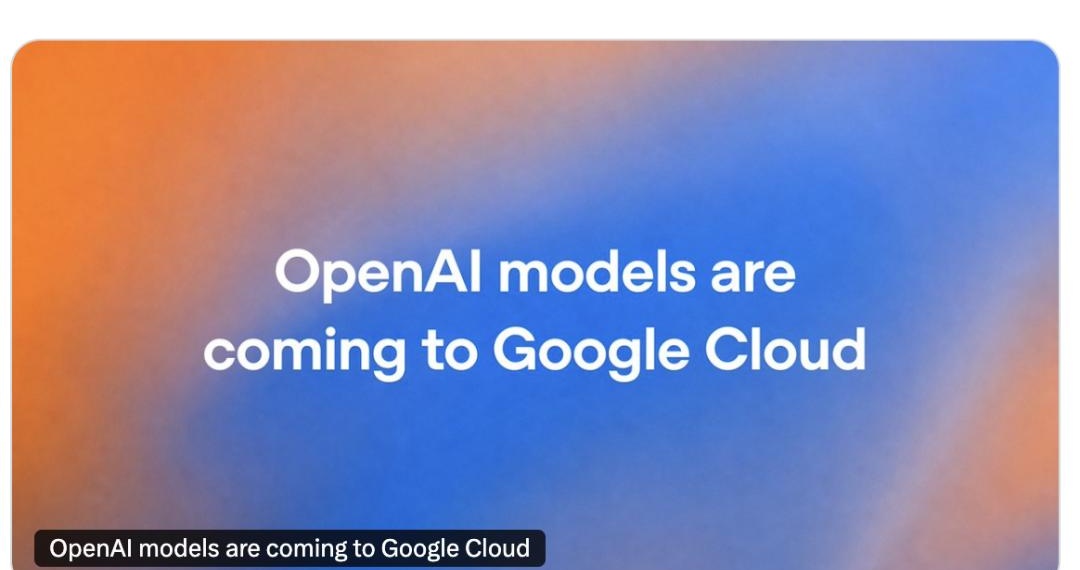
Two companies that spend every day trying to eat each other's lunch just announced a distribution deal. On October 21, 2026, OpenAI said its frontier models — GPT-6 Astra, GPT-6.1 Sol, and GPT-6 Luna — are coming to Google Cloud's Model Garden, alongside Codex agentic workflows. Google Cloud's official blog followed on October 22, 2026, framing it as giving customers "the right model for every workload."
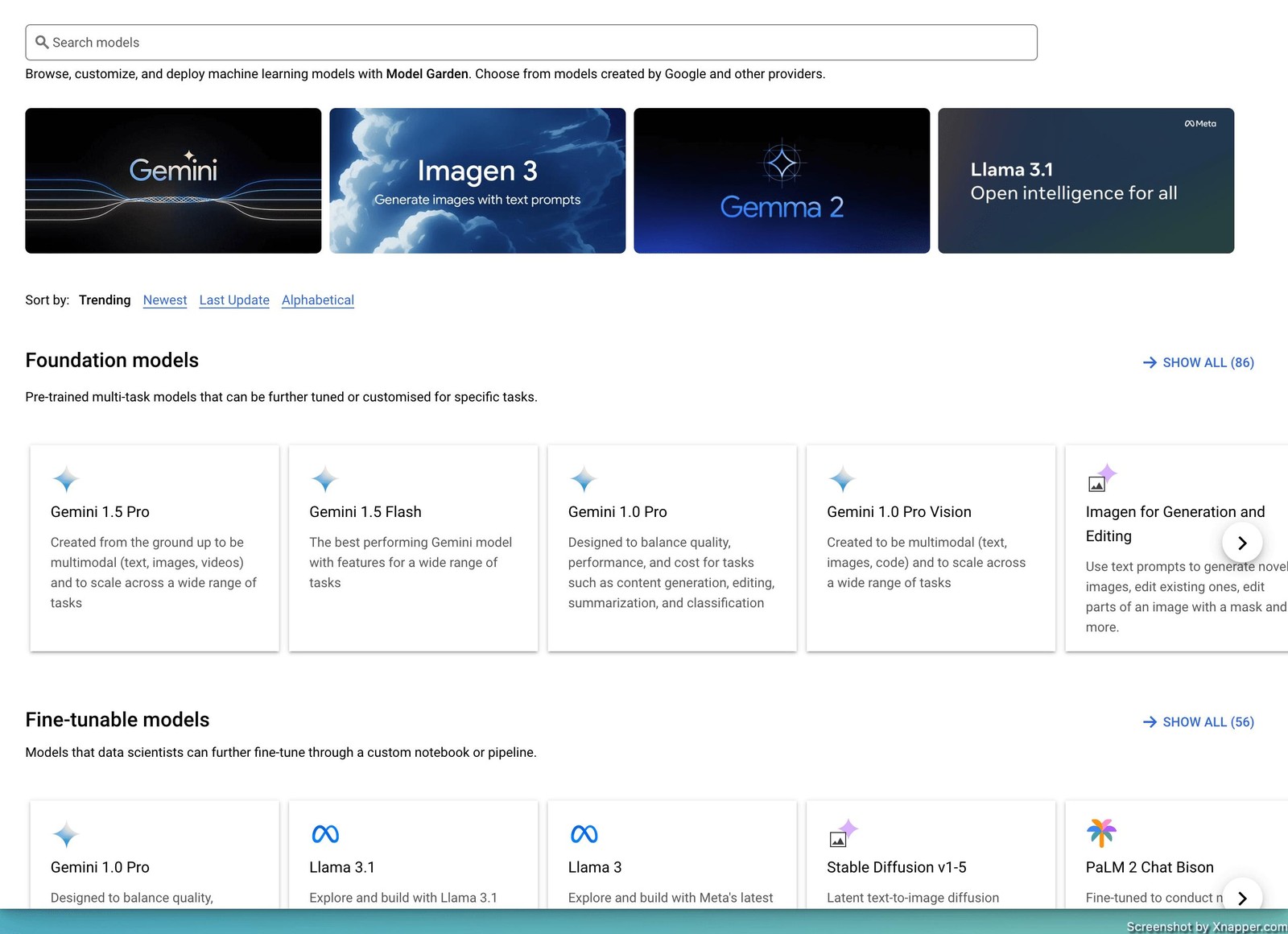
The headline number is this: Google Cloud is now the only hyperscale cloud provider offering all three leading closed-source LLMs — OpenAI's GPT-6 family, Anthropic's Claude, and Google's own Gemini — on a single platform, plus more than 200 other models. That is a competitive position neither Azure nor AWS can match today.
What's actually shipping
The three GPT-6 models are rolling out in private preview to select enterprise customers. General availability is "coming soon" with no firm date. Codex CLI and Desktop users can already connect their local workflows to Google's Gemini platform for inference. Down the line, OpenAI models will appear inside Google Antigravity and Gemini for business.
Pricing is the gaping hole. Neither company published per-token rates for any of the three models on Model Garden. Model IDs, supported regions, quotas, and rate cards require a signed-in console and an accepted preview request. This is not an open marketplace listing — it is a negotiated enterprise channel, and the terms stay private until you are in the room.
Billing runs through Google Cloud Marketplace: one invoice, existing spend commitments drawn down, usage counting toward Flexible Savings Plans across model providers. The fine print matters here. Google's own FSP documentation states that "third-party products don't get any discounts from the FSP." A CIO counting on FSP economics for GPT-6 Astra usage is counting on terms Google has not published.
The security wrapper is the real product
Google's pitch leans heavily on enterprise governance. Customer prompts, context, and outputs stay inside a designated data perimeter and are never used to train foundation models. Zero Data Retention options are "coming soon," as is Confidential Compute. Queries route through hardened, isolated gateways, and every interaction sits under authenticated identity with VPC Service Controls and unified audit logging.
For regulated industries — finance, healthcare, government — that wrapper is arguably more valuable than the model itself. Box VP of AI Products Yashodha Bhavnani said as much in the announcement: "By using OpenAI models through Google Cloud, we will be able to give customers access to OpenAI's frontier AI models alongside Google Cloud's security and compliance capabilities."
Six months from exclusive to everywhere
The speed of OpenAI's multi-cloud expansion is the real story. Its exclusive distribution deal with Microsoft Azure ended in April 2026. Within six months:
| Date | Cloud Provider | Milestone |
|---|---|---|
| April 2026 | Microsoft Azure | Exclusive distribution ends |
| April 28, 2026 | Amazon Web Services | GPT models arrive on Amazon Bedrock |
| June 10, 2026 | Oracle Cloud | OpenAI models launch on OCI |
| October 21, 2026 | Google Cloud | GPT-6 family + Codex enter Model Garden |
Source: OpenAI announcements, Google Cloud blog, Forkast News analysis
OpenAI's gpt-oss 120B and gpt-oss 20B open-weight models were already on Google Cloud before this announcement. What arrives now is the closed, frontier tier — the models you cannot download, only rent.
Greg Brockman, OpenAI's President and co-founder, called it "an important step in making our most capable models and Codex available where customers are already building." Google Cloud CEO Thomas Kurian told SiliconANGLE the same day: "We are focused on giving customers a broad selection of models, including those from OpenAI, so they can choose the right model for any given job."
Why it matters
The cloud AI market just crossed a threshold. For the first time, a single hyperscaler sells every top-tier closed model. That changes the buying decision for enterprises in three ways.
First, model neutrality becomes a procurement feature. When GPT-6, Claude Opus 5.5, and Gemini 4 Argon all sit behind one Google Cloud invoice with unified IAM and audit logs, the cost of switching models drops to near zero. Enterprises can route coding tasks to GPT-6 Astra, long-context research to Claude, and Google-native workflows to Gemini — without three vendor contracts, three security reviews, and three compliance assessments. That portability is exactly what model vendors have spent years trying to prevent.
Second, the value is moving from the model to the shelf. Forkast's analysis put it sharply: "The model is the product on every shelf. The shelf is the moat." When four hyperscalers sell roughly the same frontier models, none of them compete on model quality. They compete on governance, pricing, integration, and data residency. OpenAI gets distribution breadth. Google gets to host its rival's most valuable product and collect the infrastructure margin. Both sides win — and the model itself becomes more commoditized with each new cloud it lands on.
Third, the frenemy dynamic is now structural. Google and OpenAI compete directly in search, coding agents, consumer chatbots, and model research. Google's Gemini is an explicit rival to GPT-6. Yet Google Cloud now sells GPT-6 to enterprises and integrates it into Google Antigravity. This is not a temporary truce — it is recognition that cloud infrastructure is a neutral platform business, and excluding the most-demanded model would cost Google more in cloud revenue than it gains in model market share. Microsoft learned this with Azure OpenAI Service years ago. Google is catching up fast.
The fine print you should read
Before treating this as instant availability, three caveats.
The preview is gated. "Select enterprise customers" means you apply, get vetted, and negotiate terms. Public Model Garden documentation did not list any OpenAI model at announcement time. This is closer to a private beta than a product launch.
The watts did not change. Google Cloud's claim to offer all three models is a distribution claim, not a capacity claim. Serving GPT-6 Astra at scale requires GPU clusters that remain rationed across the same hyperscalers that were rationing them last week. Availability and latency will vary, and the biggest customers will still get priority.
The FSP discount may not apply. If your enterprise negotiates Flexible Savings Plans expecting GPT-6 spend to count toward discounts, verify with your Google account team. The public documentation says third-party products are excluded.
What to watch next
- Pricing transparency: expect per-token rates for GPT-6 on Google Cloud within four weeks, likely matching or slightly undercutting direct OpenAI API pricing to drive Marketplace volume.
- Azure response: Microsoft will likely deepen its Anthropic and third-party model lineup to counter Google's "all three" positioning before the end of 2026.
- GA timeline: if private preview drags past December 2026, the announcement was more signaling than shipping — watch for customer reference calls as the real signal.
- Multi-cloud routing: at least one Fortune 500 will publicly announce a model-agnostic routing layer on Google Cloud by the end of Q1 2027, treating GPT-6, Claude, and Gemini as interchangeable commodities.
- Oracle and AWS countermoves: both already sell OpenAI models; expect them to emphasize their own governance and pricing wrappers rather than model breadth, since they cannot match Google's three-in-one claim.
The era where a frontier model was locked to one cloud is over. OpenAI completed that transition in six months. The question now is whether Google Cloud's "all three in one place" advantage holds long enough to matter — or whether Azure and AWS simply buy their way to the same shelf.
No comments yet