Abu Dhabi's most important AI company is weighing a radical choice: sell majority control to American investors, or lose access to the chips that power its entire strategy.
G42 executives have held exploratory talks about selling a controlling stake to U.S. companies, Bloomberg reported on September 4, 2026 (UTC). The discussions are driven not by valuation or governance in the ordinary sense — they are driven by a clock.
The 270-day deadline
On July 10, 2026 (UTC), the U.S. Commerce Department moved the United Arab Emirates from a restricted export-control tier into Group A:5, the category reserved for America's closest defense partners. The upgrade granted G42 and its operating arm Core42 license-free access to advanced computing hardware under the Strategic Trade Authorization (STA) exception.
But the permission came with an expiration date. STA eligibility for G42 and Core42 "will expire 270 days from July 10, 2026, unless these companies become U.S. companies." That puts the deadline around April 6, 2027 (UTC). After that, every chip shipment reverts to discretionary licensing — slower, politically exposed, and impossible to underwrite against multi-gigawatt data center buildouts.
The mechanism is deliberate. Washington is offering a golden bridge: become American, and the bridge stays open. Remain Emirati, and every future Nvidia or AMD order becomes a fresh national-security review.
What's at stake
The numbers are large. In November 2025, the Commerce Department approved the export of up to 35,000 Nvidia Blackwell-class chips to G42, conditioned on "rigorous security and reporting requirements." G42 is building Stargate UAE, a 1-gigawatt compute cluster operated by OpenAI and Oracle inside a 5-gigawatt UAE-U.S. AI Campus in Abu Dhabi. The first 200-megawatt phase is scheduled to go live in 2026.
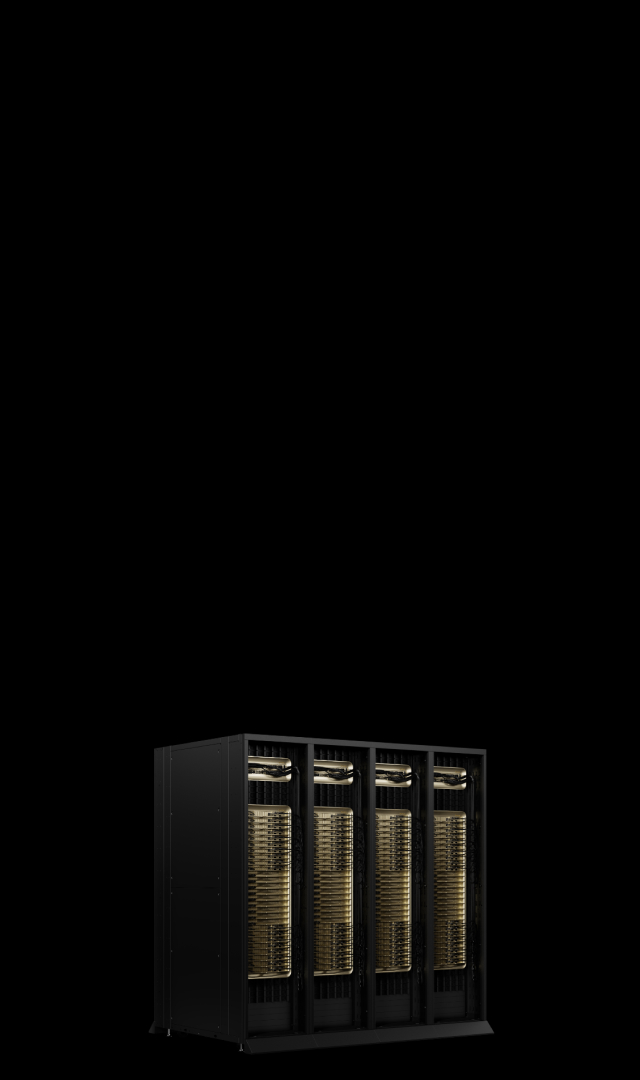
Without a durable ownership structure, the chip supply behind those commitments could fray once the STA window closes. You cannot finance a data-center program on the assumption that Washington will renew your chip privileges every year.
A two-year compliance trail
G42 did not arrive at this moment by accident. The company spent the better part of two years unwinding its China exposure, a sequence that reads like a checklist written in Washington:
- April 2024: Microsoft invested $1.5 billion for a minority stake and a board seat, on the condition that G42 divest Chinese holdings and cut ties with Huawei. G42 complied, selling stakes including its position in ByteDance.
- February 2026: G42 built the "Common Operating Picture," a tracking system designed to U.S. specification that gives American policymakers visibility into where chips end up after purchase.
- July 2026: The UAE earned its export-control upgrade, cited by Commerce as recognition of the country's status as a Major Defense Partner and its support for U.S. national-security interests.
Each concession bought a permission with an expiry date. Majority U.S. ownership is the only structure that does not need renewing — it converts a license into a property right.
Who might buy
Microsoft sits at the center of both the opportunity and the constraint. Its $1.5 billion investment came with audit rights over how G42 used American technology, and Vice Chair Brad Smith fills the board seat Microsoft received. A U.S. reincorporation would be the logical completion of that alignment, and Microsoft is the most plausible anchor for any majority-sale consortium.
No final decisions have been made. A G42 representative told Bloomberg the company is "focused on executing its long-term growth strategy and does not comment on confidential discussions or potential transactions" — a declination, not a denial.
Why this matters beyond Abu Dhabi
Chip diplomacy began as a question of which processors could go where. It is becoming a question of who owns the company holding them. That is a far deeper intervention in another state's industrial strategy, and the Gulf shows it first because the sums are largest.
The exposure is not only regulatory. Iran has threatened OpenAI's $30 billion Stargate site in Abu Dhabi, so whoever ends up owning these clusters inherits physical risk alongside compliance risk.
Other Gulf sovereign-AI vehicles face the same choice. Saudi Arabia's Humain received the same 35,000-chip approval in November 2025. If license-free access ultimately requires American owners, every national AI champion outside the U.S. confronts the same calculation — and China has been weighing export controls on its own models and chips along the same logic.
G42 has spent two years proving it can be trusted with American technology. The talks Bloomberg describes suggest that trust, however thoroughly proven, still comes with a renewal date.
No comments yet