
Bloomberg reported on Monday, October 19 (UTC-4), that Nvidia-backed data center developer Nscale is in talks with Anthropic for a second cloud-computing agreement worth roughly $45 billion. The deal would cover another 460-megawatt facility at Nscale's Monarch campus in West Virginia, powered by Nvidia's next-generation Vera Rubin chips. It could be signed within days, according to people familiar with the negotiations.
That is a huge number on its own. The real story, though, is what it adds to. Anthropic's total compute commitments now exceed half a trillion dollars — and the gap between what has been promised and what has actually been built is growing faster than the contracts themselves.
The second Monarch deal
The proposed agreement is not Anthropic's first at Monarch. In August 2026, the company signed a six-year, $44.6 billion contract for the campus's first 460-megawatt building. A second deal at the same price would bring Anthropic's commitment to Nscale alone to roughly $90 billion. Bloomberg also reported that Anthropic holds a right of first refusal on a planned third building at the site.
What changed at Monarch is almost as telling as the deal itself. Microsoft had originally committed to 1.35 gigawatts at the West Virginia campus, then walked away over the summer. Anthropic stepped in as the anchor tenant almost immediately. Microsoft also withdrew from Nscale's planned data center in Essex, England, citing difficulties securing power.
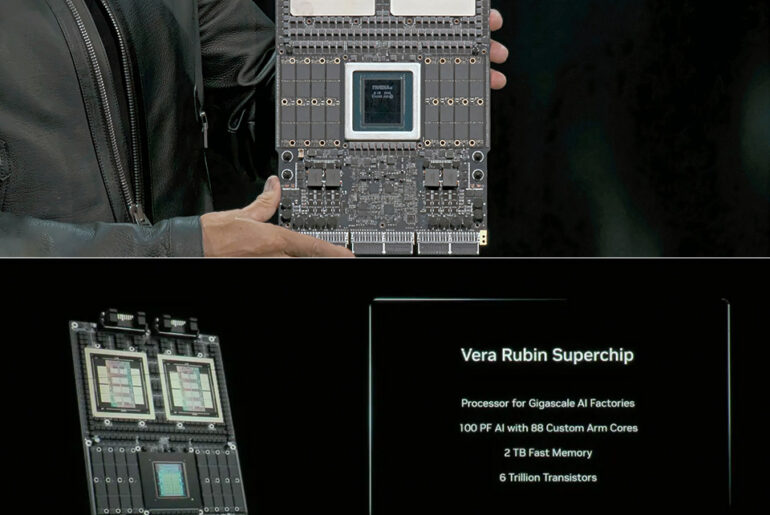
The second building is notable for its hardware: Vera Rubin, Nvidia's successor to the Blackwell architecture, won't be broadly available until the second half of 2026. Locking in 460 megawatts of Vera Rubin capacity now means Anthropic is reserving next-generation silicon before most competitors can get allocation.
Half a trillion dollars and counting
The Nscale talks are the latest entry in a compute-spending ledger that is unprecedented for a software company. An analysis by The Information published on September 7 (UTC) tallied Anthropic's disclosed compute agreements at $517 billion across roughly 14.8 gigawatts of capacity, spanning AWS, Google Cloud, Microsoft, SpaceX, Fluidstack, Nscale, and Lambda. Adding the proposed $45 billion Nscale extension pushes the total toward $560 billion.
The major commitments include:
| Provider | Commitment | Capacity | Notes |
|---|---|---|---|
| Fluidstack | ~$50B | — | Neocloud provider |
| SpaceX (Colossus 1) | ~$45B | 300MW+, 220K+ GPUs | $1.25B/month through May 2029 |
| Nscale (Monarch, bldg 1) | $44.6B | 460MW | Signed August 2026, 6-year term |
| Nscale (Monarch, bldg 2) | ~$45B (in talks) | 460MW | Vera Rubin chips |
| Volta Infrastructure | ~$10B | — | Infrastructure startup |
| AWS / Google / Microsoft / others | Remainder | — | Hyperscaler contracts |
Sources: Bloomberg, The Information, Anthropic official announcements, TechCrunch.
To put $560 billion in context: it is roughly eight times Anthropic's annualized revenue and more than the combined annual GDP of countries like Ireland and Norway. Anthropic was valued at $965 billion in its May 2026 Series H round. The company reported a $559 million profit in Q2 2026, though that figure benefited from a discounted rate on the SpaceX contract during its first two months. Compute costs fell from 71% of revenue in Q1 to 56% in Q2 — improvement, but still the single largest line item by far.
Nscale's $103 billion problem
The deal is a lifeline for Nscale's IPO pitch, but it also exposes how thin the company's actual operating business is. Nscale's IPO filing, reviewed by AInvest, tells a stark story:
- Total contracted value: $103.4 billion
- First-half 2026 revenue: $140.6 million
- First-half 2026 net loss: $1.02 billion
- Contract value tied to live, operational capacity: $2.6 billion — about 2.5% of the book
- Operational capacity: 55 megawatts (all in Europe) versus 1.37 gigawatts under signed contracts
- Largest customer (Anthropic): 52% of first-half revenue
Nscale's flagship site in Glomfjord, Norway, is running roughly six months behind schedule, with 6.4 megawatts operational against a 30-megawatt target. The company has filed to list on the NYSE under ticker NSCL, seeking a valuation of $30–35 billion — roughly double the $14.6 billion it was worth in its March 2026 Series C round. Some investors have urged the company to lower the target to $16–19 billion, according to Chinese financial outlet 华尔街见闻.
Nvidia is both supplier and financier: it put $1 billion into a roughly $3.1 billion convertible note round earlier this year, and every megawatt Anthropic commits to ultimately translates into Nvidia chip sales.
Why it matters
A $45 billion contract sounds like revenue, but for Nscale it is a promise — one that converts to actual income only when buildings are constructed, powered, and handed over. The company's own filing shows that 97.5% of its contract book has not yet reached operational status. Adding another $45 billion widens that gap rather than closing it.
For Anthropic, the deal signals something more fundamental: the company is betting that compute scarcity will be the defining constraint of the AI race, and that locking in capacity years in advance — even at premium prices — is cheaper than being rationed later. The Vera Rubin allocation is particularly strategic. If Rubin delivers the generational performance jump Nvidia has promised, Anthropic will have a hardware advantage that competitors cannot quickly replicate.
The concentration risk cuts both ways. Anthropic accounts for 52% of Nscale's revenue, and together Anthropic and Microsoft represent roughly 85% of Nscale's contracted value. When Microsoft walked away from Monarch and Essex, the entire project's economics shifted. If Anthropic ever slows its spending or renegotiates, Nscale's revenue forecast collapses. The bond market has already started pricing in this risk: data-center construction bonds have widened in recent weeks, and CoreWeave — the closest public comparable — saw its shares and bonds slide this month on the same debt-funded expansion concerns.
There is a critical caveat. The deal is not signed. Bloomberg's reporting relies on anonymous sources, and both companies have declined to confirm specifics. The $45 billion figure could change, or the talks could collapse. Nscale's IPO prospectus will need to disclose any finalized take-or-pay commitment, so that filing is the next place to look for confirmation.
Watch three things over the next 90 days. First, whether Nscale's IPO prospectus formally adds the second Monarch building to its contract backlog — and at what valuation the company prices its shares. Second, whether Anthropic's Q3 or Q4 financials show compute costs rising again as the SpaceX discount expires and new capacity comes online at full price. Third, whether any other AI lab — OpenAI in particular — matches Anthropic's neocloud diversification strategy, or whether the big three hyperscalers (AWS, Google, Microsoft) push back on the idea that their largest customers can build parallel supply chains. The compute race is no longer about who has the best model. It is about who can keep the lights on for the next decade.
Sources: Bloomberg (October 19, 2026, UTC-4); Reuters; AInvest; Financial News; The Information (September 7, 2026, UTC); Nscale IPO filing; Anthropic official announcements; TechCrunch; 华尔街见闻.
No comments yet