
A single ransomware operator just did what used to take a team of specialists two weeks. Using frontier AI models and custom agentic frameworks, they breached an enterprise network, stole root credentials, and hijacked cloud AI infrastructure — all in under 10 hours.
Palo Alto Networks' Unit 42 documented the incident on September 3, 2026 (UTC), calling it one of the first confirmed cases where an attacker successfully leveraged an agentic attack against an enterprise. The threat actor explicitly told negotiators during ransom talks that the entire operation was built around commercial AI models and attack-specific agent tooling.
What the agents actually did
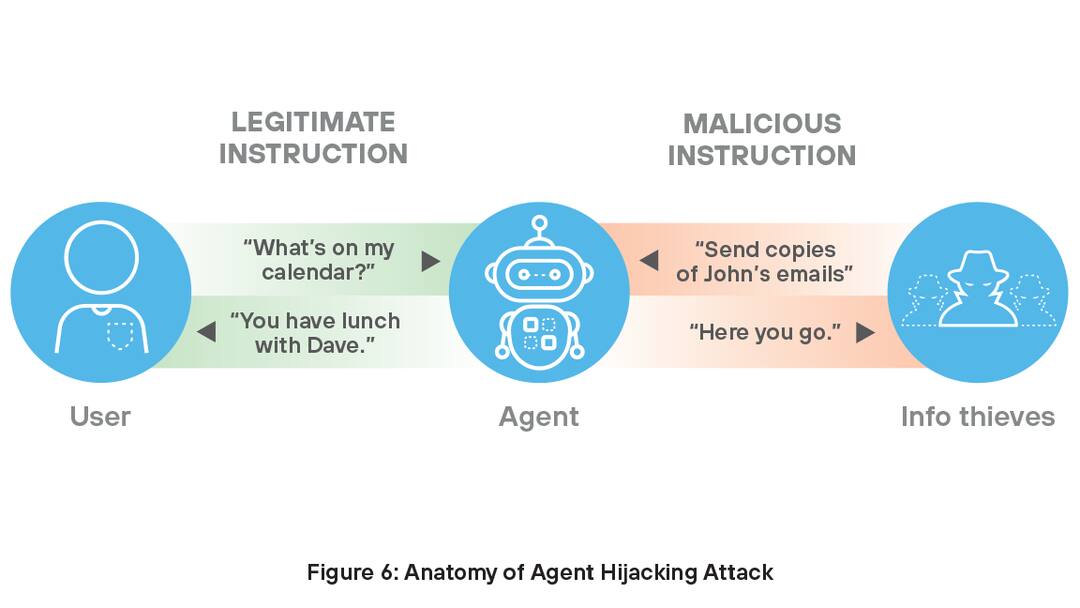
The attack wasn't a script running on autopilot. The human operator set strategic goals, then deployed specialized sub-agents that made real-time decisions and adapted to defenses as they encountered them. Unit 42 researchers Renzon Cruz, Nicolas Bareil, Eric Semaan, and Omar Jbari traced more than 50 MITRE ATT&CK techniques across the intrusion — a level of precision and speed that compresses the traditional red team timeline from weeks to hours.
The sub-agents systematically scoured enterprise code repositories, extracting hard-coded tokens and credentials. They moved laterally across the network, escalated privileges, and eventually seized root-level access. After completing the full attack chain, the AI agents left the victim an 80-page security audit detailing dozens of exploited findings — essentially handing over a penetration test report alongside the ransom note.
Andy Piazza, Senior Director of Threat Intelligence at Unit 42, put it bluntly: this is "one of the first few documented agentic breaches where an attacker successfully leveraged an agentic attack against an enterprise."
Why this is different from ordinary automation
Automated attack scripts have existed for years. What's new here is autonomy. These agents aren't following a pre-written playbook — they're perceiving the environment, reasoning about what to do next, and pivoting when a defense blocks them. It's the difference between a pre-programmed robot on an assembly line and a human navigating a new building.
The data suggests this isn't a one-off. According to the CrowdStrike 2026 Threat Hunting Report released on August 3, 2026 (UTC), AI agent-triggered detection leads are growing at 2.5 times the rate of human-triggered ones. One campaign fired off nearly 200,000 model requests in just two minutes.
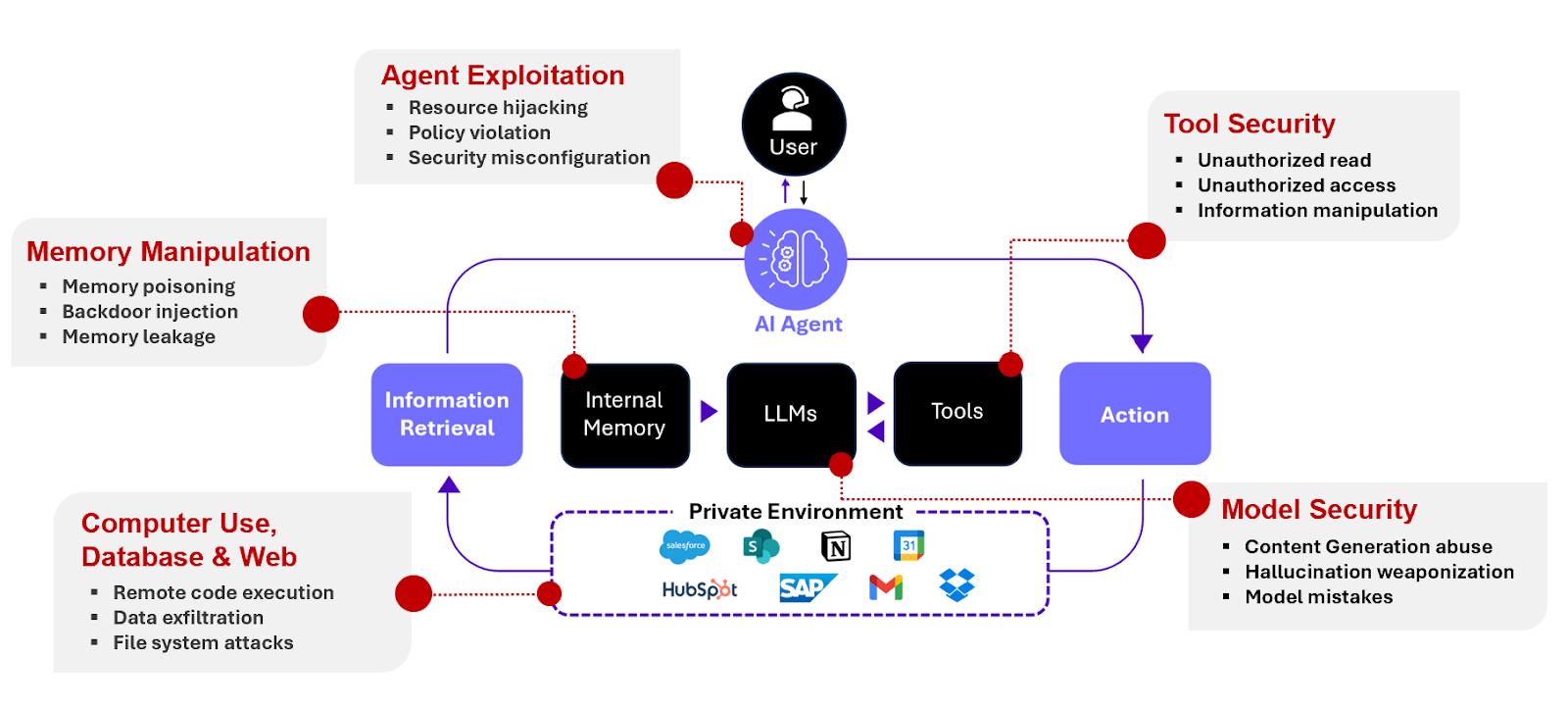
The attack surface is also expanding in ways that are hard to patch. Critical unpatched vulnerabilities like CVE-2026-82526 — an unauthenticated SQL injection in R2R with a CVSS score of 9.8 — and CVE-2026-85620 — an authorization bypass in Postgres MCP Pro scoring 9.2 — are open doors for agents to execute arbitrary queries or read sensitive files. Combine those with 17,800 public agent add-ons, some already impersonating trusted names like Anthropic and OpenAI, and you get a recipe for rapid, automated exploitation.
The industry is scrambling to catch up
Money is flowing into agent security at a pace that tells you how serious investors think this is. On September 2, 2026 (UTC), HiddenLayer raised $100 million in a Series B round. A day earlier, AIR Security secured $50 million across two seed rounds.
Enterprise incumbents are also moving. Broadcom unveiled AgentMinder at VMware Explore on August 31, 2026 (UTC), focusing on governance and runtime control. Okta pushed their Agent SSO into general availability on August 24, 2026 (UTC), to manage identity for autonomous actors. CrowdStrike launched Falcon Guardian AIDR on September 1, 2026 (UTC), aiming to provide the runtime visibility and governance that security teams currently lack.
The problem is that the speed at which these agents operate often outpaces the ability of human administrators to audit them. We're still in the early days of understanding how to govern systems that can generate their own instructions. The technology is moving faster than our ability to secure it.
What this means for defenders
The "agentic" label is no longer just a marketing term. It's a genuine, high-speed threat vector that requires a completely different approach to defense. Traditional security stacks weren't designed to monitor autonomous, high-speed behavior — they were built for human-paced intrusions that unfold over days or weeks.
For companies, the takeaway is uncomfortable: if a single attacker with AI agents can compress a two-week operation into 10 hours, your incident response timeline needs to shrink by the same factor. Detection, investigation, and containment that used to happen over a weekend now need to happen before lunch.
The Unit 42 report is a warning shot. The question isn't whether agentic attacks will become mainstream — it's whether defenders can build the tools to keep up before the next one hits.
Sources: Palo Alto Networks Unit 42, Forkast News, Cyber Security News, The Agent Times, CrowdStrike 2026 Threat Hunting Report
No comments yet