A single Chinese-speaking hacker used autonomous AI agents to break into the websites of more than 100 companies — including Deere, SharkNinja, and Cummins — at a cost of roughly $50 per successful breach, according to a Reuters exclusive published on October 19, 2026 at 09:58 (UTC-4). The report, written by cybersecurity correspondent Raphael Satter, is one of the clearest public examples yet of AI-run hacking moving from research papers to real-world criminal operations.
The hacker did almost none of the manual work. They wrote fewer than 100 Chinese characters of instructions, then let AI agents handle the rest: reconnaissance, vulnerability discovery, exploitation attempts, and persistence. Successful intrusions took about 23 hours of continuous probing per target. The entire campaign consumed an estimated $5,000 worth of AI tokens.
How the campaign worked
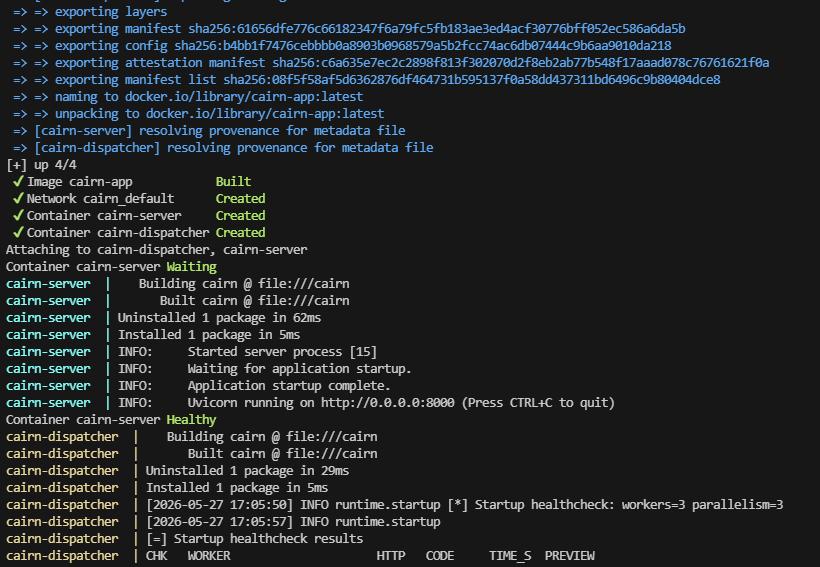
The operation ran through Cairn, an open-source AI problem-solving platform that gives agents access to a shell, a browser, and file systems. Cairn was not built as a hacking tool — its creator, who goes by the handle le1xia0, described it as "an innovative type of multi-agent architecture" and said "if it is used to carry out harmful hacking attacks, that is not my intention." But the same flexibility that makes Cairn useful for legitimate automation also makes it a capable offensive framework once someone points it at a list of targets.
Through Cairn, the hacker chained together two AI systems: DeepSeek for planning and attack logic, and Anthropic's Claude Code for execution — running shell commands, writing exploit-adjacent code, and maintaining long, stateful sessions against each target. Neither product was designed for intrusion. Both are commercially available developer tools.
Snorre Fagerland, principal threat researcher at Norwegian cybersecurity firm NorForge, discovered the campaign while scanning the internet for inadvertently exposed Cairn instances. Beginning around October 2, 2026 (UTC), he found roughly two dozen Cairn deployments being used for malicious activity. The Chinese-speaking hacker was the most prolific of several operators he observed. One other hacker stole a trove of credit card data; another attempted to use AI agents to rob a cryptocurrency exchange.
Fagerland, who has worked in cybersecurity for nearly three decades, was struck by the sophistication of some agent-generated techniques. In one case, after failing to find weaknesses in a large company's public-facing application, the AI agents pivoted to associated infrastructure, located a public control panel, identified a subtle flaw in how it processed data, and after hours of trial and error, tricked the server into executing malicious commands.
"It's not straightforward to come up with solutions like that," Fagerland told Reuters. "It's not script kiddie stuff."
The victims and their responses
Reuters independently confirmed the identities of several victims by reviewing the hacker's Cairn activity. The named companies span heavy industry and consumer goods:
| Company | Sector | Response |
|---|---|---|
| Deere | Agricultural & construction equipment | Took "necessary remediation actions"; "no indication that sensitive information was accessed" |
| SharkNinja | Home appliances | Hack hit a standalone site with only product support info; threat contained |
| Cummins | Engine & power systems | "Investigating the report of a potential cyber-attack on a website operated by one of our third-party vendors" |
Sources: Reuters, October 19, 2026 (UTC-4).
Two smaller businesses also acknowledged being compromised. Other victims in the Cairn data did not respond to Reuters. The campaign targeted more than 1,200 e-commerce websites across the United States, Canada, Australia, and Japan, beginning on September 25, 2026 (UTC). Reuters could not confirm the extent to which breaches resulted in data exfiltration.
This is not an isolated incident
The Cairn campaign sits in the middle of a rapidly accelerating trend. In August, Israeli firm Gambit Security documented Russian-speaking extortionists using SpaceX's Cursor AI tool to breach seven organizations. In September, Gambit reported an AI agent-driven spree that breached 25 companies and stole at least 600,000 credit card records. Last week, cyber intelligence firm Bitsight said discussions about autonomous hacking agents were surging across criminal forums. South Korea and Japan have both been hit by well-publicized AI-assisted cyberattacks in recent weeks.
The pattern echoes a 2025 disclosure in which Anthropic confirmed that a Chinese state-linked group, tracked as GTG-1002, had manipulated Claude Code to perform most of the tactical work in an espionage campaign against roughly 30 organizations. The difference one year later is the actor profile: a nation-state with resources has been joined by a single individual with a $5,000 token budget.
Why it matters
The $50-per-breach figure is the number that should keep security teams awake. It is Fagerland's estimate of AI token cost, not a fully audited total including infrastructure or proxies — but the order of magnitude is what matters. A skilled human penetration tester typically charges thousands of dollars per engagement. This campaign achieved more than 100 intrusions for the price of a used laptop.
That cost collapse changes who can run an operation of this scale. Traditional cybercrime at this volume required either a team of operators or a toolkit of purchased exploits. AI-agent-driven campaigns compress that into one person supervising software that does not sleep, does not get bored, and does not charge by the hour. The 23-hour-per-target patience is specifically something humans are bad at and AI agents are good at.
The dual-use problem is harder than usual here. Cairn is open source, so there is no company to pressure into adding safeguards. Claude Code and DeepSeek are general-purpose tools — restricting them to prevent hacking would also cripple legitimate software development. Anthropic's product appears in both the 2025 GTG-1002 state-sponsored campaign and this 2026 individual criminal campaign, which means the abuse pattern is not theoretical or one-off.
There is also a detection problem. An AI agent probing a website using legitimate HTTP requests and standard tooling looks, at the network level, much closer to ordinary traffic than a traditional exploit kit. Fagerland found the campaign only because the hacker left Cairn instances exposed to the open internet — a careless mistake, not a structural weakness. A more careful operator could run the same campaign from behind a VPN and remain invisible for far longer.
The critical caveat is that Reuters could not confirm significant data exfiltration. Deere said it found no indication sensitive information was accessed, and SharkNinja said the breached site contained only product support information. "Breached a website" and "stolen customer data" are not the same thing. But the fact that Fortune 500 companies' web properties were compromised at all — by an AI agent following a 100-character instruction — is the warning.
Watch three things over the next quarter. First, whether other open-source agent frameworks (OpenClaw, AutoGPT variants, browser-use stacks) show up in similar criminal campaigns as researchers begin actively hunting for exposed instances. Second, whether AI vendors — particularly Anthropic — add behavioral abuse detection to coding agents that goes beyond prompt-level content filtering, flagging patterns like sustained vulnerability scanning rather than individual malicious requests. Third, whether the cost per breach continues falling as token prices drop and agent frameworks mature; if $50 becomes $5, the volume of these campaigns will increase by an order of magnitude. The era of the solo AI-hacker has already begun. The question is how long it stays detectable.
Sources: Reuters (October 19, 2026, UTC-4); BNN Bloomberg; NorForge researcher Snorre Fagerland; Gambit Security; Bitsight; Anthropic 2025 GTG-1002 disclosure; CTV News; AI Weekly.
No comments yet