Five days after launch, GPT-6 Astra is still finding new ways to surprise people. This weekend, two independent demonstrations showed that OpenAI's flagship model isn't just good at text and code — it can actually find its way around in three-dimensional space.
One benchmark had it collecting gems in a sprawling 3D maze for 60 straight hours. The other had it playing Valve's Portal from start to finish, no walkthrough, no human help. Both results landed within the last 48 hours, and together they tell a story about where agentic AI is heading.
MazeBench: the first double-digit score
MazeBench is a 3D open-world spatial reasoning test built by Jonathan and David Pappas in late July. It drops an agent into a world of 200-plus rooms stuffed with 100 gems — one point each. The rooms are full of Sokoban-style puzzles, elevator tiles, toggleable walls, and slippery ice floors. Fall into a pit and you're undoing, resetting, or teleporting back to a room you've already cleared.
When the benchmark first came out, the best agents couldn't make it past the first few rooms. Even with Python code execution enabled — which lets a model essentially outsource the spatial math to a script — GPT-5.6 Sol topped out at 13%, Claude Fable 5 at 11%, and Claude Opus 5 at 9%. Without Python, everything scored under 1%.
Astra changed that. Running in Codex max mode with Python disabled, it spent over 60 hours in the world and walked away with 14%. That makes it the first model to hit a double-digit score on the no-Python track, and it's seven times higher than the next-best model, Claude Fable 5.1, which managed 2%.
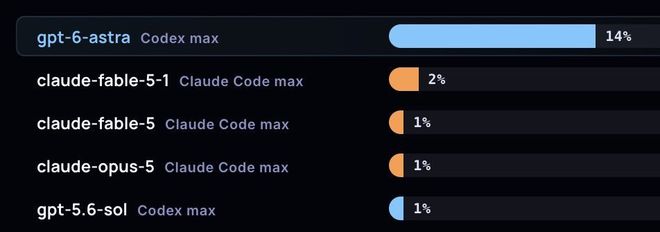
MazeBench no-Python leaderboard. Source: @patience_cave on X, posted September 7, 2026.
| Model | Harness | MazeBench (no Python) |
|---|---|---|
| GPT-6 Astra | Codex max | 14% |
| Claude Fable 5.1 | Claude Code max | 2% |
| Claude Fable 5 | Claude Code max | 1% |
| Claude Opus 5 | Claude Code max | 1% |
| GPT-5.6 Sol | Codex max | 1% |
Source: @patience_cave, MazeBench benchmark, September 7, 2026.
The gap is striking, but 14% is still a long way from 100. Astra has a blind spot: it tends to read levels from a top-down perspective, so walls that only become visible from a 3D angle get treated as if they aren't there. It clears the tutorial rooms fine, but once puzzles stack blocks more than three layers high, it gets stuck. Still, the fact that a general-purpose model can hold a 100-step spatial plan in its head without delegating to code is new.
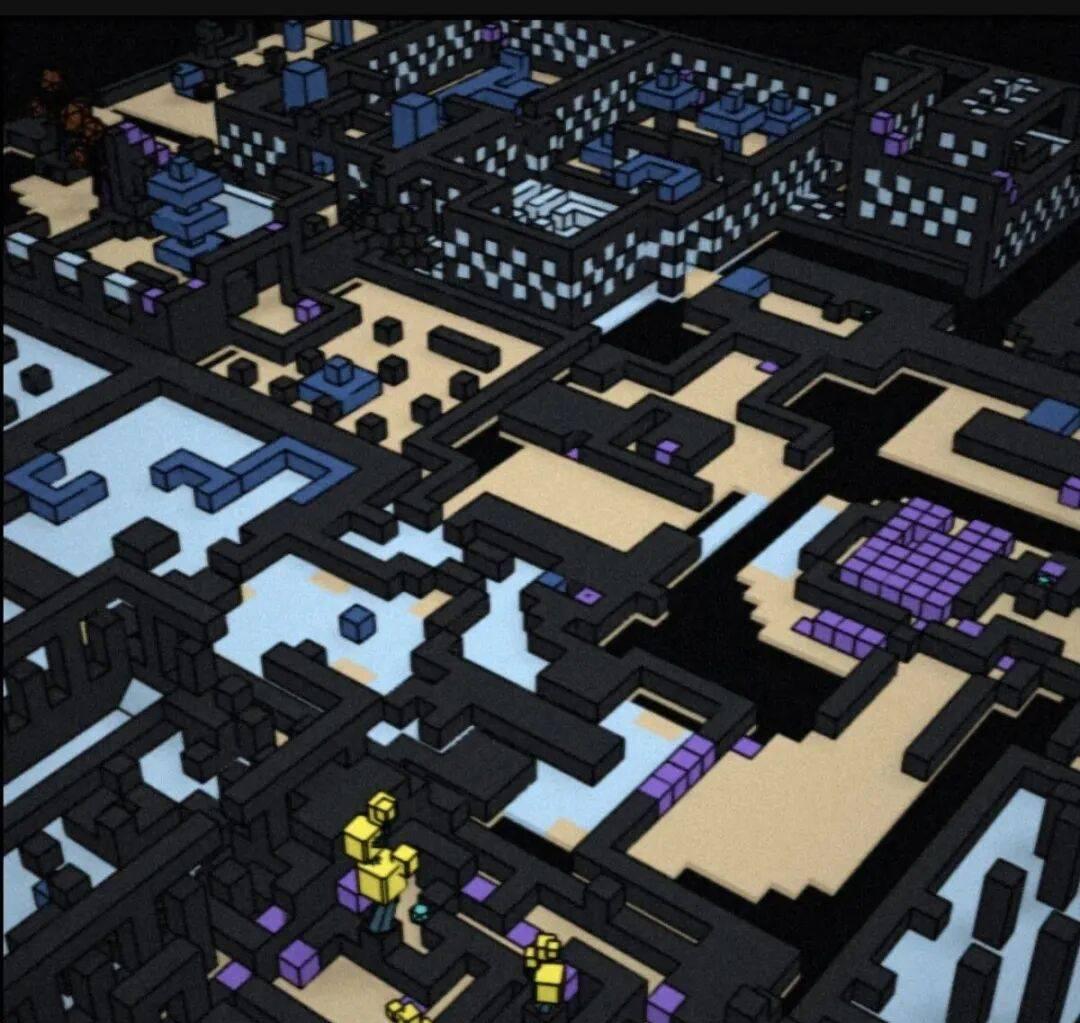
MazeBench world overview — 200+ rooms, 100 hidden gems. The yellow figures are agents.
Beating Portal in 24 hours for $571
If MazeBench is the controlled experiment, the Portal run is the street fight. A developer going by CozyBlaze hooked GPT-6 Astra up to a modified version of Valve's Source engine — using a tool called SourcePauseTool and the Model Context Protocol to send button presses — and let it play the full 3D game.
No text adventure version. No walkthrough. No scripted checkpoints. The model saw the same first-person view a human player sees, and it had to figure out the portal gun, the cubes, the momentum puzzles, and GLaDOS all on its own.
The raw run took roughly 24 hours. That sounds slow until you understand the setup: the game freezes every time Astra needs to think, then unfreezes to execute the next sequence of moves in real time. The compressed demo video runs about two hours. Across the full playthrough, Astra made roughly 3,300 tool calls.
The API bill came to about $571 — though CozyBlaze noted it was actually covered by a $200-per-month Codex Pro subscription.
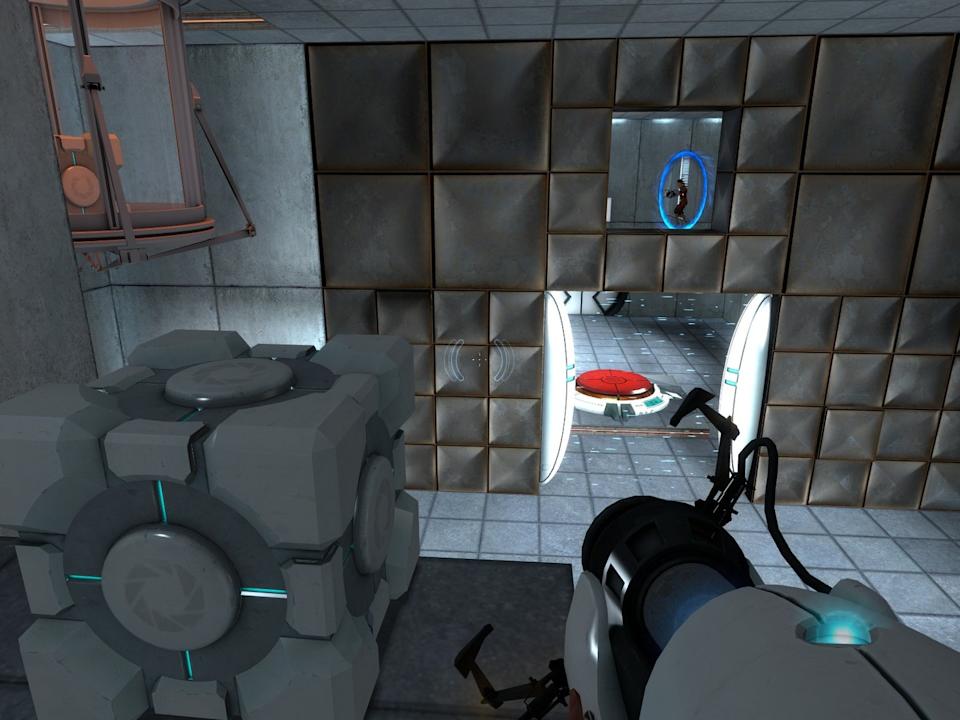
Valve's Portal — the game Astra completed without human assistance. Source: Valve / Engadget.
CozyBlaze has downplayed the result as a demo rather than a benchmark, and that's fair. But the significance isn't the score — it's that a single general-purpose model explored an unfamiliar spatial environment, learned its mechanics, and solved every puzzle end to end. OpenAI has hinted at a universal gameplay agent for a while; this is the closest thing to a public proof of concept.
What this actually means
Put the two results together and a pattern emerges. Astra's headline launch numbers — 99.9% on ARC-AGI-3, 57.9% on Terminal-Bench — were about abstract reasoning and terminal tasks. These new demos are about something harder: understanding and acting in a physical, three-dimensional world where the state changes as you move.
That matters because the next wave of AI applications — robotics, autonomous agents, computer use — all require exactly this kind of spatial competence. A model that can navigate Portal can probably navigate a warehouse, a construction site, or a messy desktop. It just needs the right interface.
The 60-hour MazeBench run and the $571 Portal playthrough also remind us that this capability is still expensive and slow. Astra didn't breeze through either challenge; it ground them out. But the gap between Astra and every other model on MazeBench — 14% versus 2% — suggests the grinding is getting dramatically more effective.
If you're keeping score at home: ARC-AGI-3 is essentially solved. Coding benchmarks are converging. The new frontier is 3D. And right now, GPT-6 Astra is the only model that's actually in the game.
No comments yet